“LifeArk did not set out to sequester carbon. We set out to save lives by building housing that can withstand disasters affecting the world’s most vulnerable populations. The carbon-locking effect is a consequence of choosing durability over disposability.”
What Bill Gates Says About Plastics & Carbon
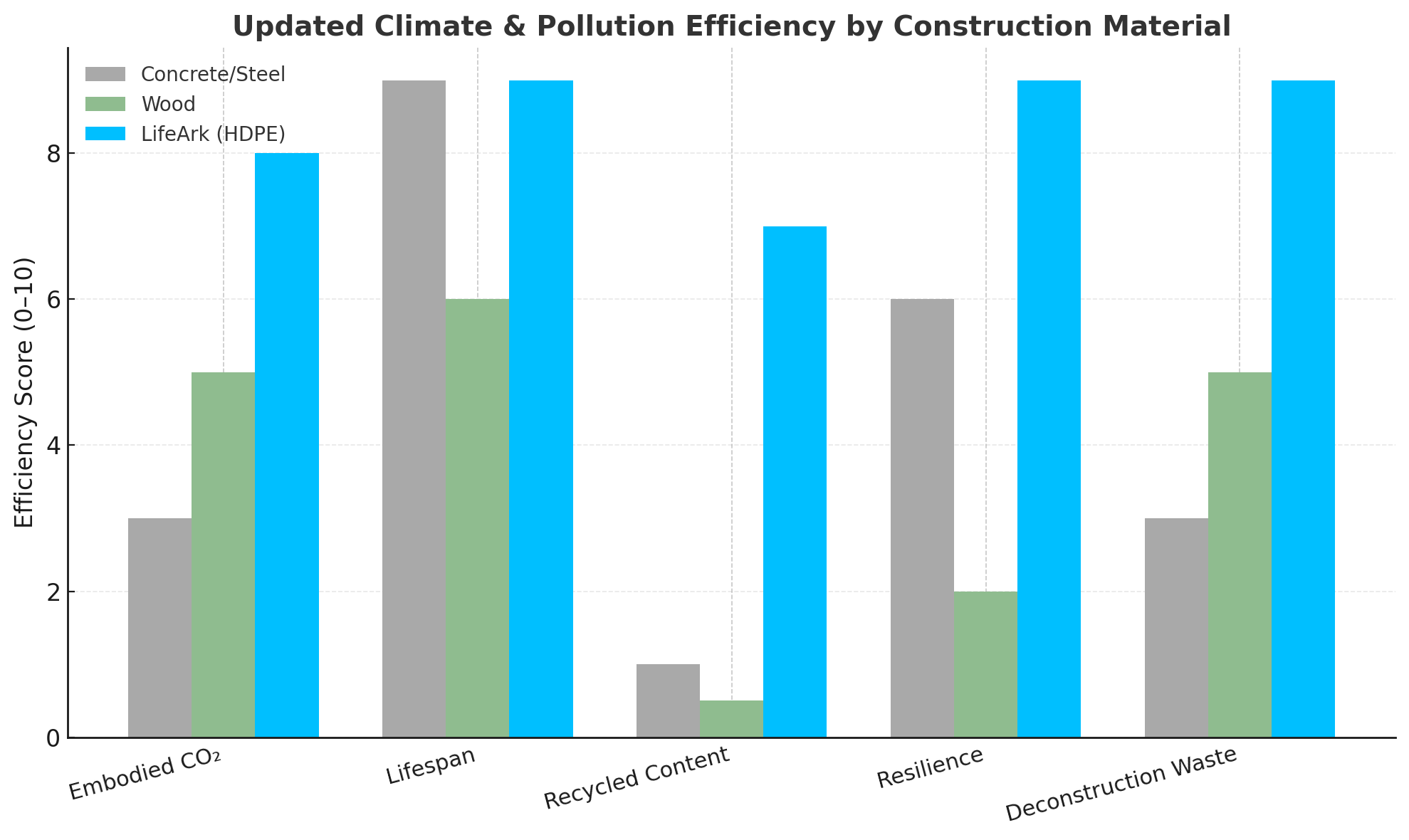
In his book How to Avoid a Climate Disaster, Bill Gates highlights that plastics are unusual because “around half of the carbon stays in the plastic,” unlike steel and concrete, which emit nearly all of their carbon during production. He goes further to suggest that plastics could ultimately become a true carbon sink, where we “take carbon out of the air and put it into a bottle or other plastic product, where it would stay for decades or centuries.” LifeArk’s structural platform aligns directly with this idea. HDPE is a particularly carbon-dense polymer, containing approximately 86–90 percent carbon by weight. Each kilogram of HDPE holds carbon that would otherwise create roughly 3 kilograms of CO₂ if released, and when formed into LifeArk’s thick, UV-protected structural shells, this carbon remains stored for 100 to 300 years.
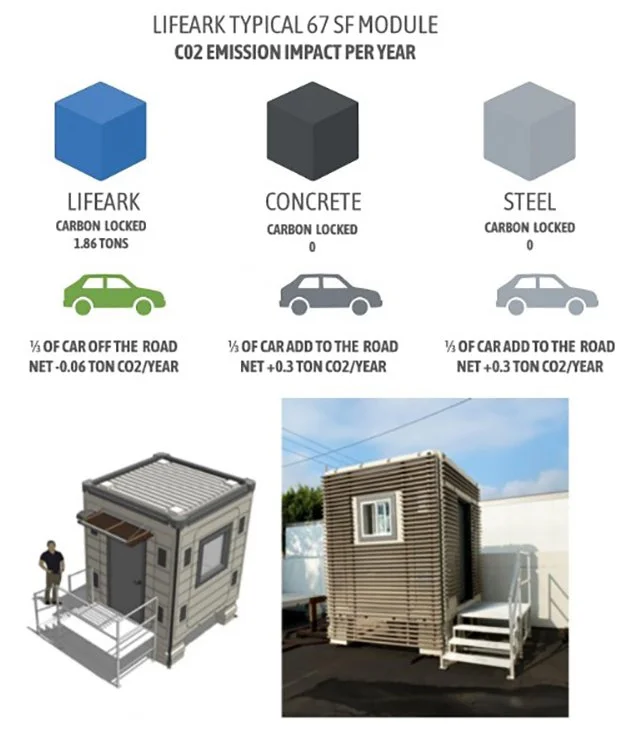
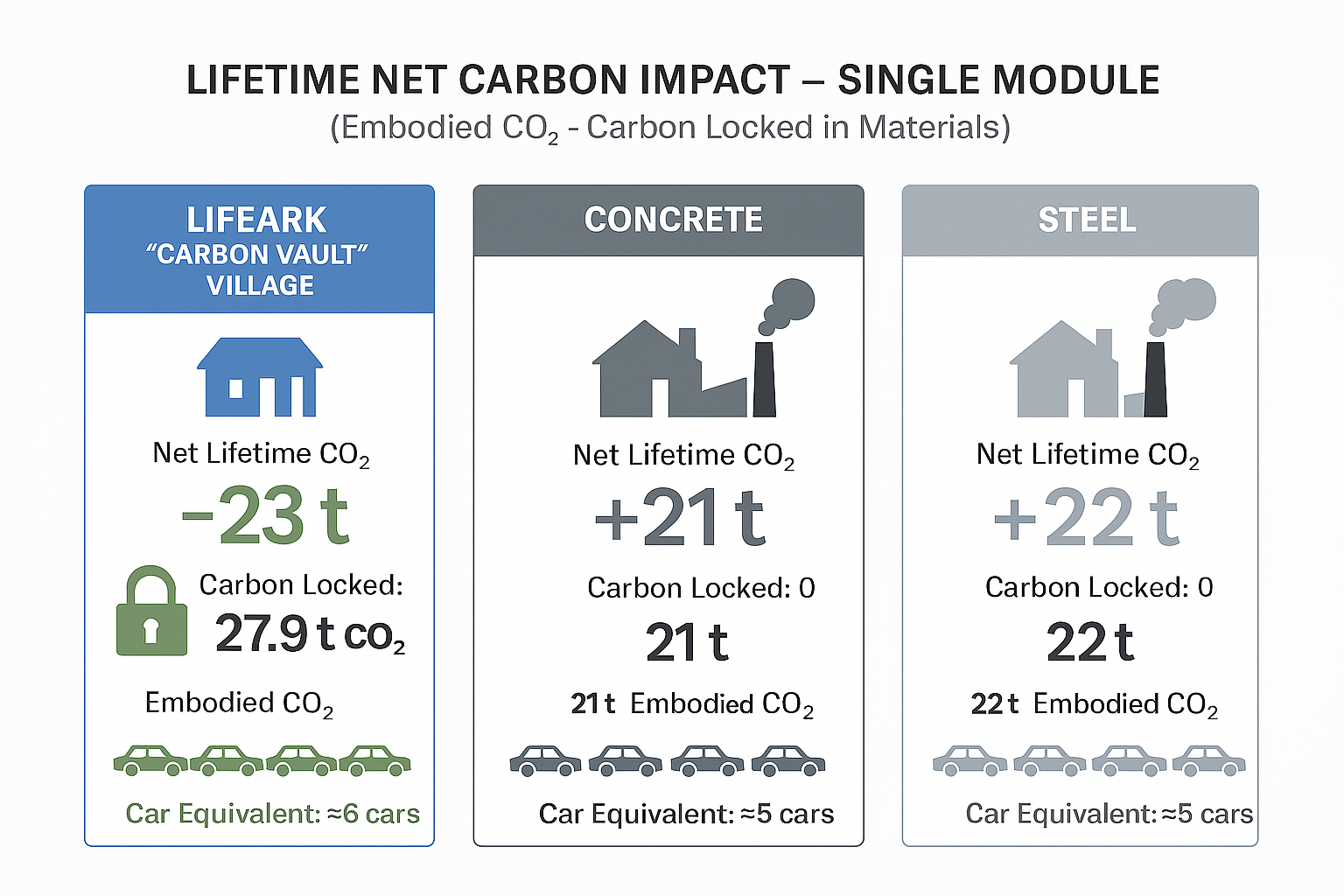
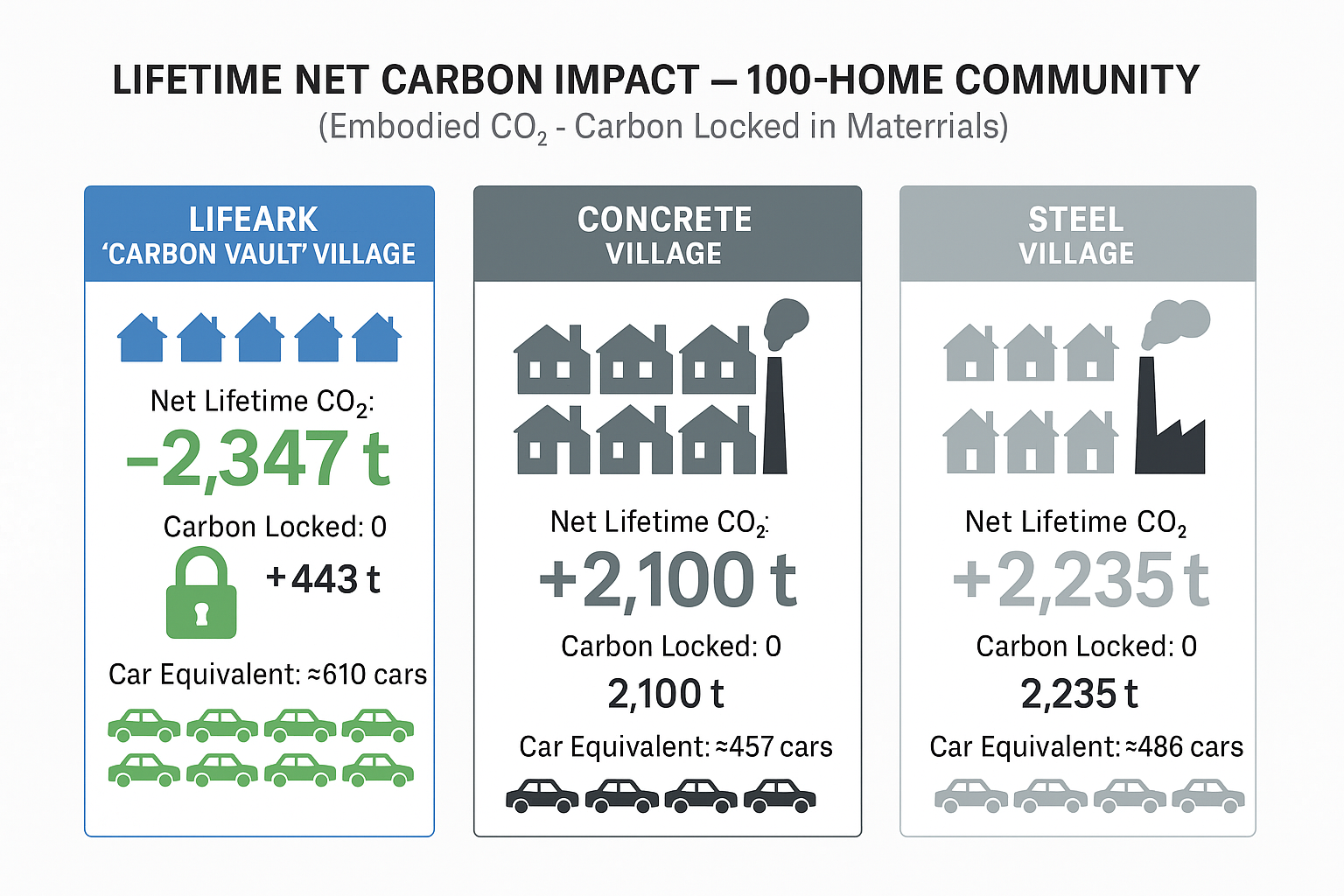
LifeArk was designed with the climate in mind. As we respond to the global need for more resilient housing in a changing climate, our team focused on ways to integrate sustainable building methods and practices into our system.
LifeArk sources 30% post-consumer recycled plastic in our resin formulation

Common Facts about high-density polyethylene (HDPE):
HDPE is the most environmentally stable of all plastics, giving off no harmful fumes into the environment.
HDPE does not contain BPA, heavy metals or allergens.
HDPE is a naturally germ-resistant material and offers zero corrosion, zero maintenance.
HDPE's viscous and elastic characteristics prevents deformation and formation of cracks.
HDPE is 100% recyclable and is one of the easiest plastic polymers to recycle.
Products made from Type 2-HDPE recycled plastic are considered eco-friendly because they are made from post-consumer products and are recyclable at the end of their useful life.
HDPU Foam:
The HDPU foam insulation in our parts is EPA SNAP approved, has no global warming potential (GWP), no ozone depleting potential (ODP), is VOC-exempt, PFAS free, and HFC/HCFC free