Living with Water: Resilient Communities at the Water's Edge
Can climate-vulnerable coastal communities preserve their existing culture, water-based way of life, and livelihoods while also gaining safe and adequate housing, sanitation, clean energy, food production, economic opportunity and climate resilience?
More than a billion people live in informal settlements, and a large share of them live where land meets water: river banks, deltas, lagoons, atolls and flood-prone coastlines. They are fishing families, boat-builders, traders and farmers whose lives are organized around the water, and they are the people that flooding, storms, sea level rise and earthquakes reach first. The usual answer is to move them to land, which takes away the way of life that sustains them.
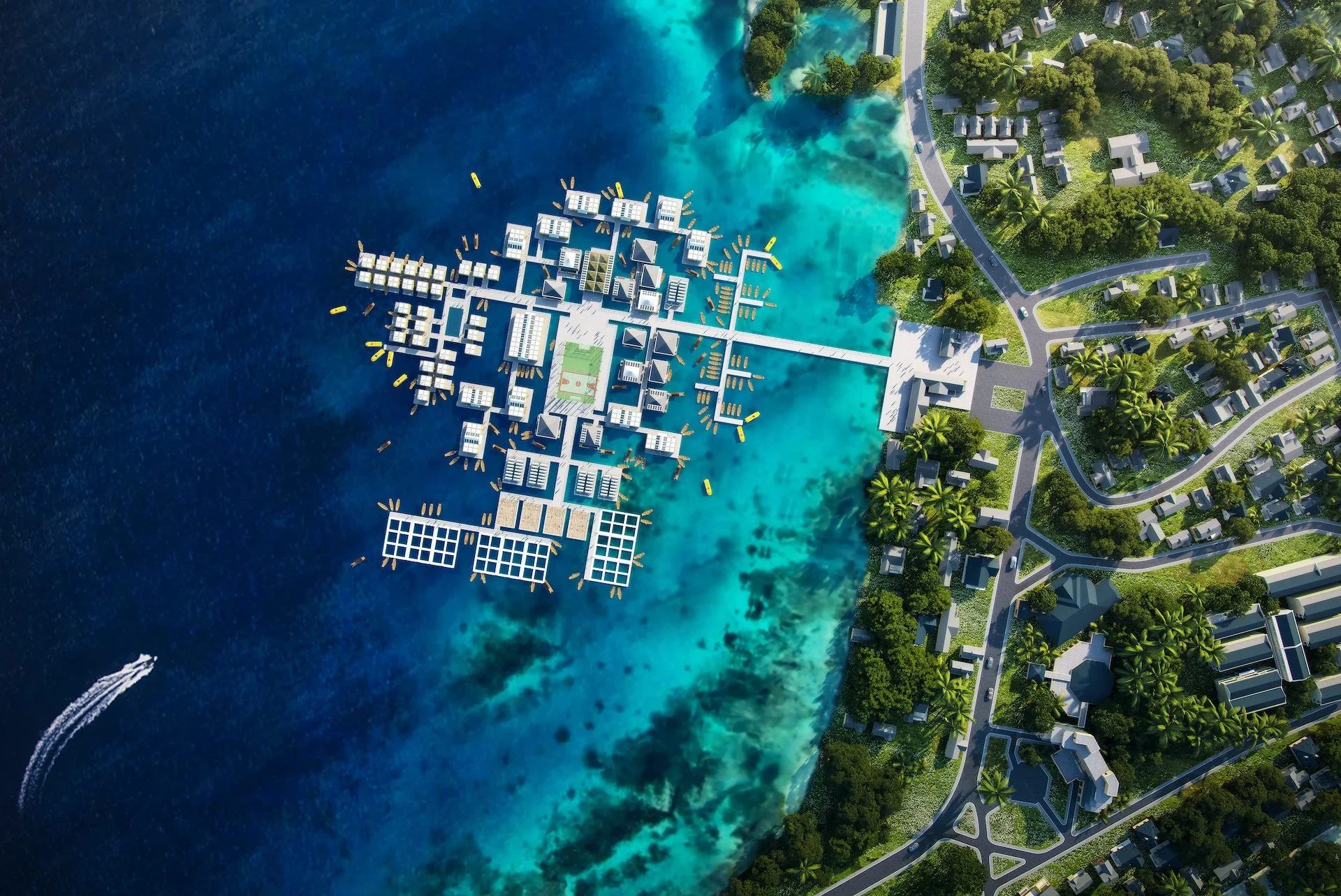
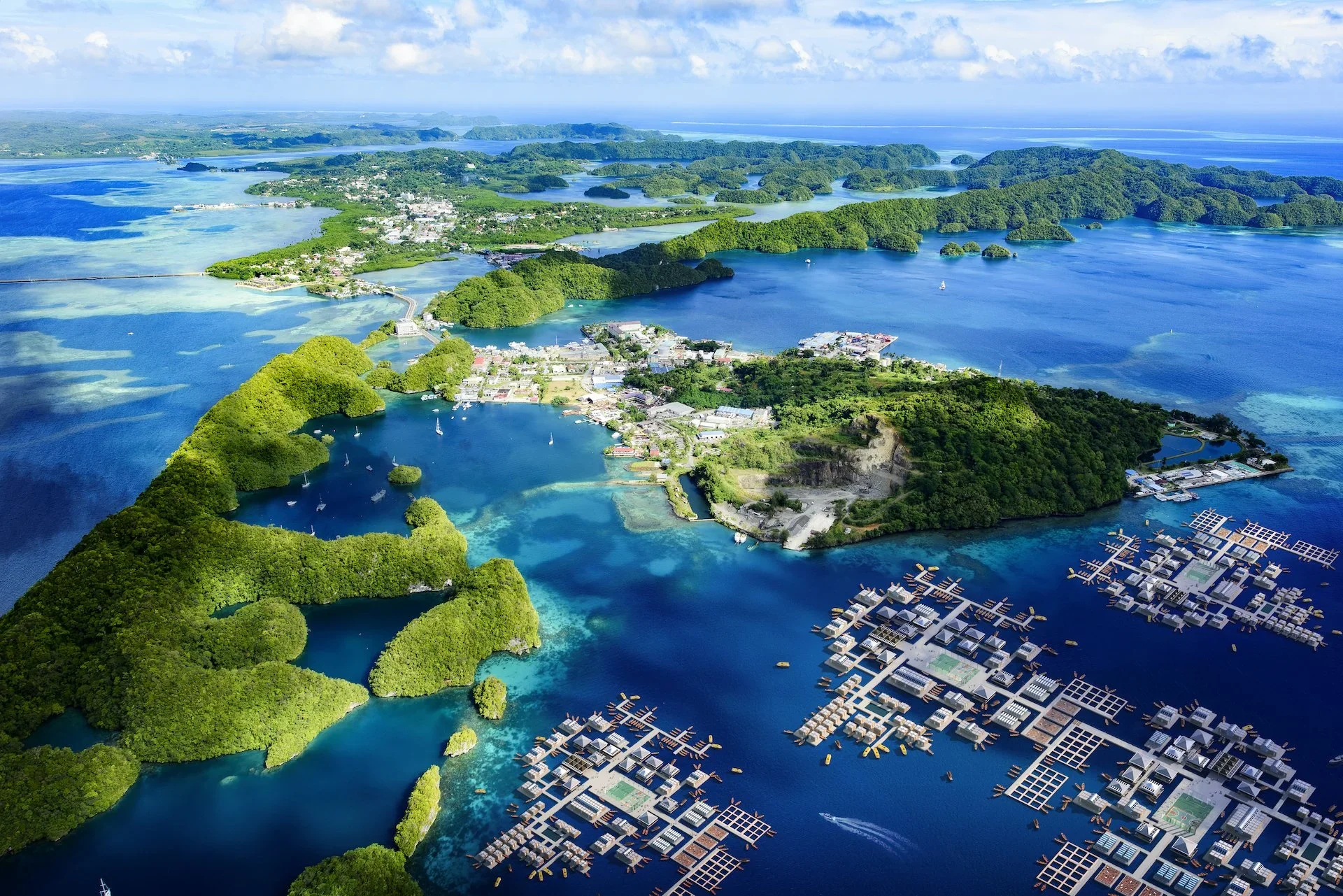
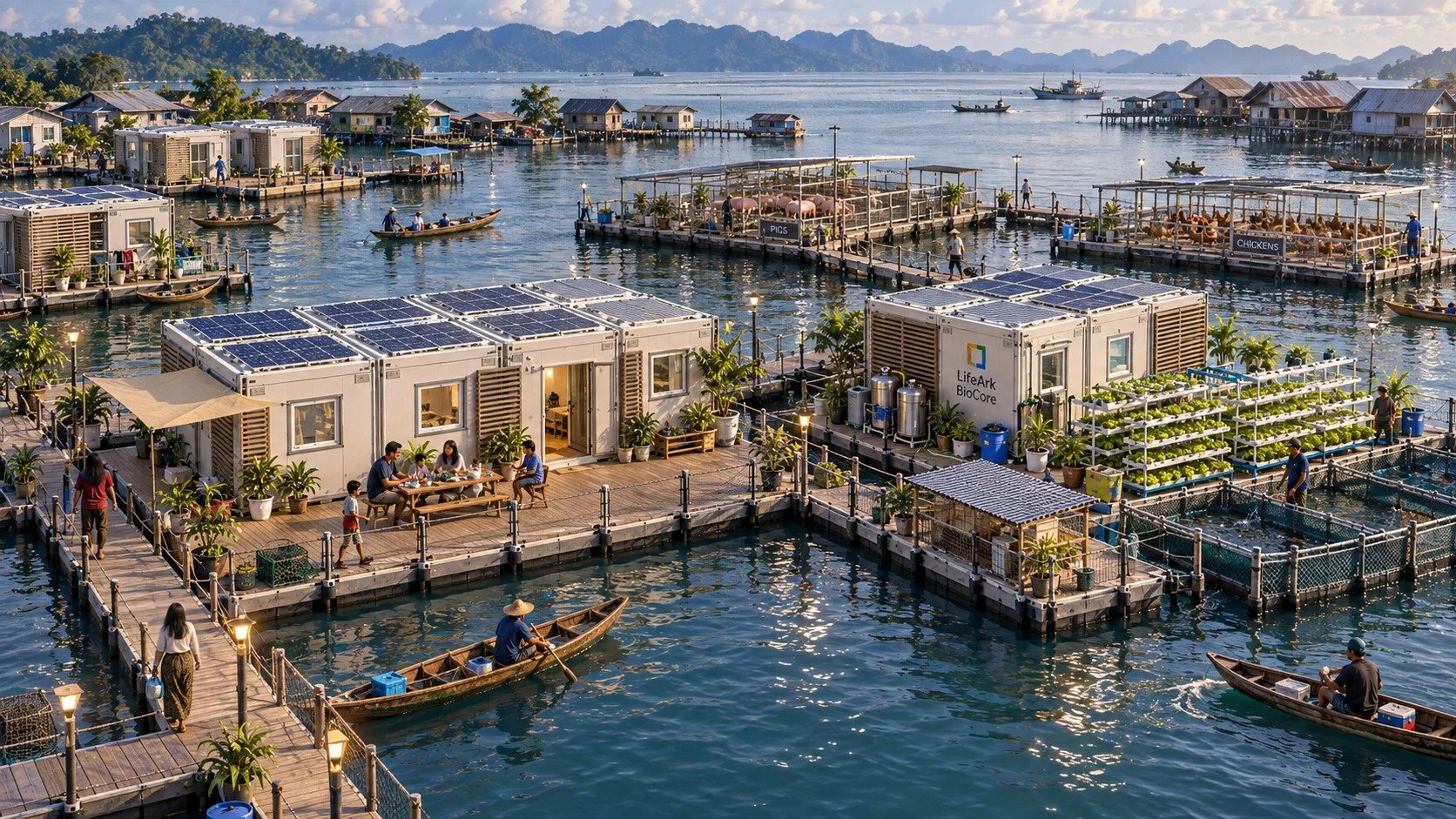
Living with Water is a different answer: a complete community built on the water where people already live, from durable floating and amphibious homes manufactured locally, with its own sanitation, clean water, energy, food production, learning and livelihoods, planned and run by the people who live there. It is a model for any coastal or riverine community in the world.
Where The Idea Began:
In 2015, architect Charles Wee visited indigenous river communities in the Amazon where the river rises and falls by as much as nine meters every year. Families lived stilt or floating homes because they could not afford to move to higher ground, and every year they rebuilt. The question that founded LifeArk was simple: what can an architect do about this? The second lesson came from the 2011 Tohoku earthquake and tsunami. In the aftermath photographs, the structures that survived intact were the rotationally molded polyethylene water tanks. A hollow, seamless, buoyant polymer shell had outlasted everything built of conventional materials. Put the two observations together and the LifeArk idea appears: a prefabricated modular building system, molded from long-life polymer, that floats, survives, and can be mass produced and assembled anywhere.
“LifeArk is a pre-fabricated, modular building system that can create self-sustaining aquatic or terrestrial communities.” ”
The idea was recognized in 2017, developed and certified in California over the following decade, and is now ready to be deployed as a complete community
Cultural Preservation: What Cannot be Lost
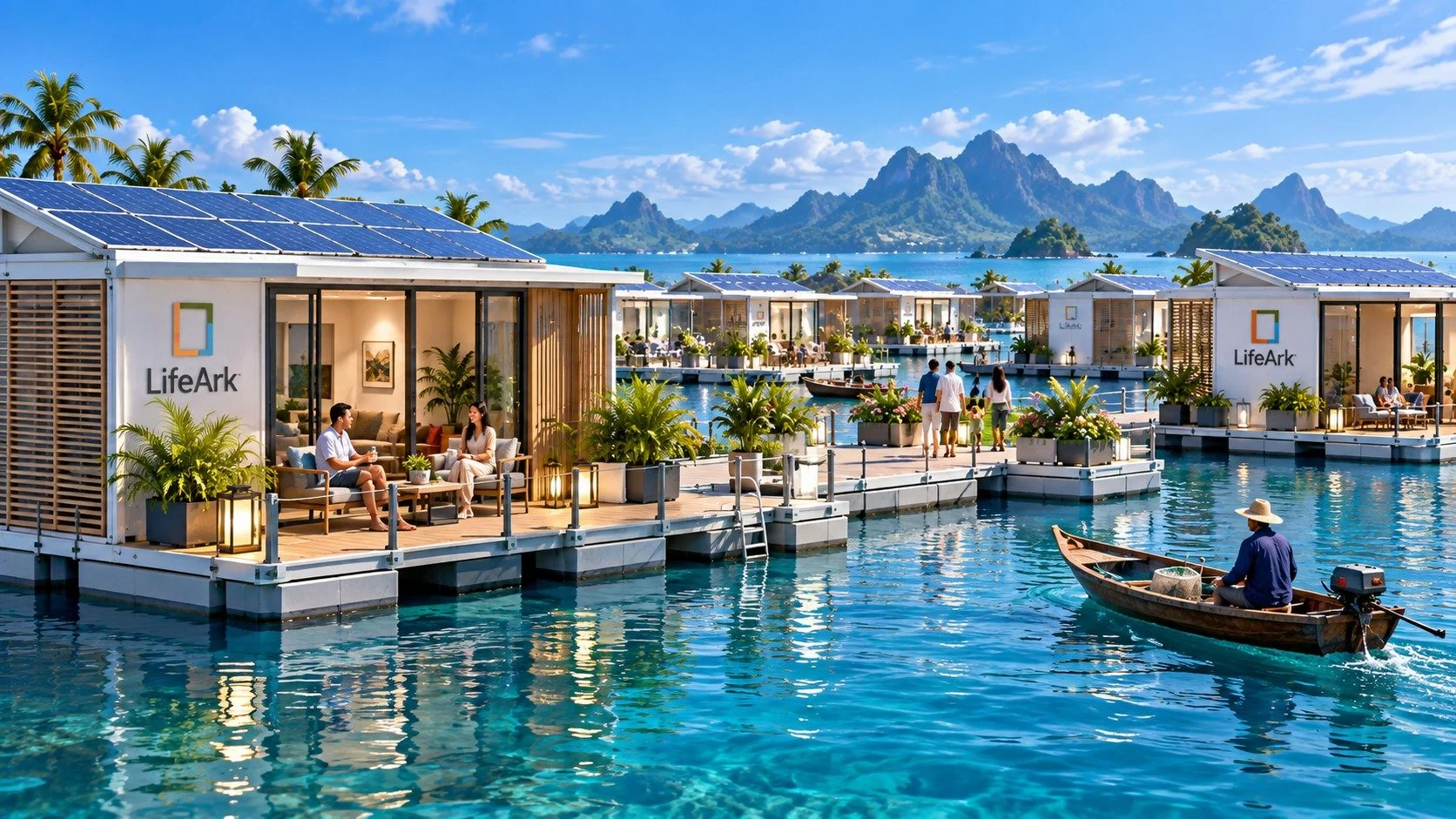
Coastal Communities have deep cultures, rich relationships with the water, and generations of knowledge. LifeArk is designed to protect what matters - fishing life, family clusters, and a way of life that has endured for centuries.
The community stays where it is, while the housing and infrastructure around it are improved. Safer homes, clean water, sanitation, reliable power, schools and clinics are added without removing the activities and connections that make the community work.
Ten Years of Proof:

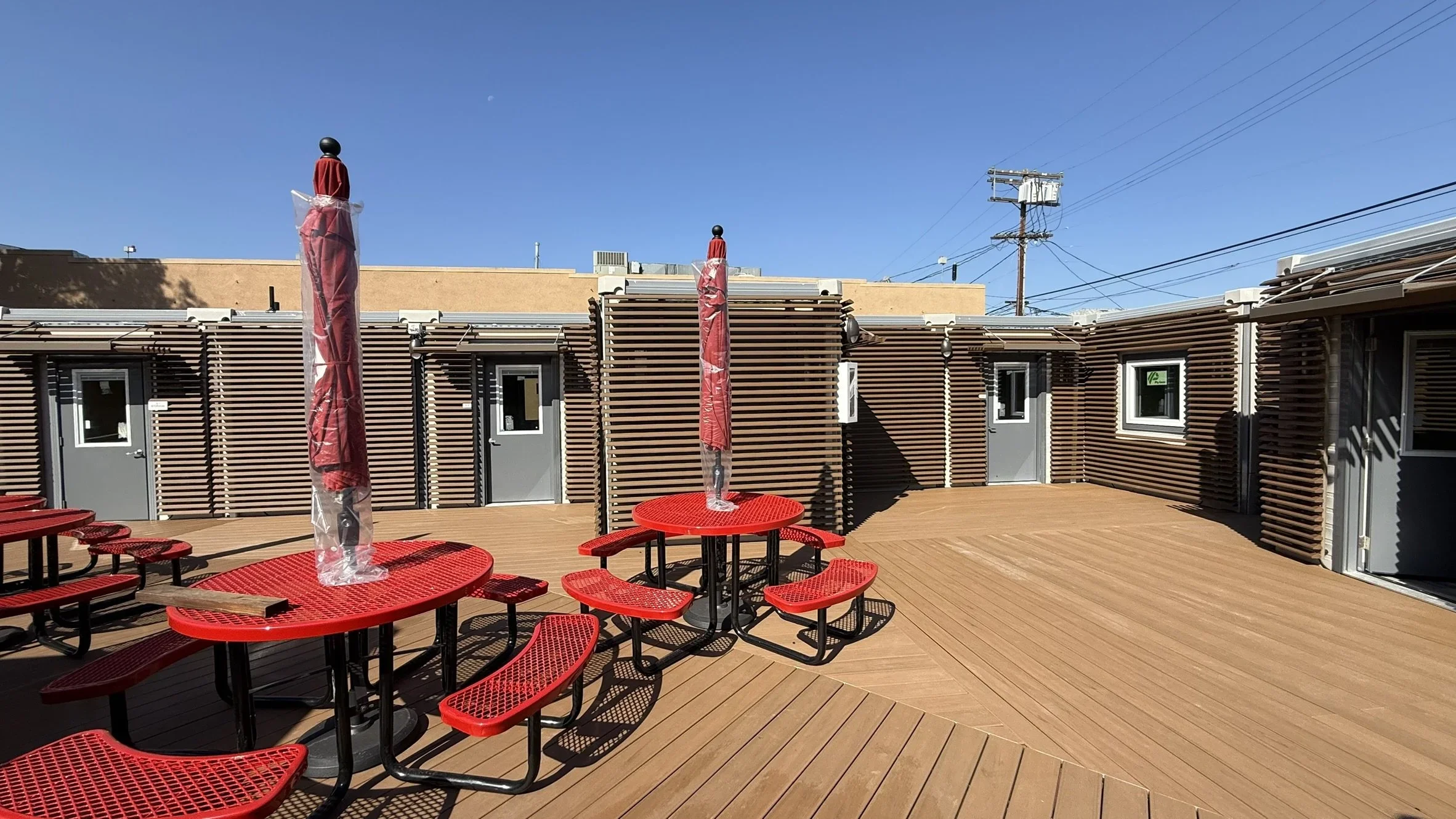
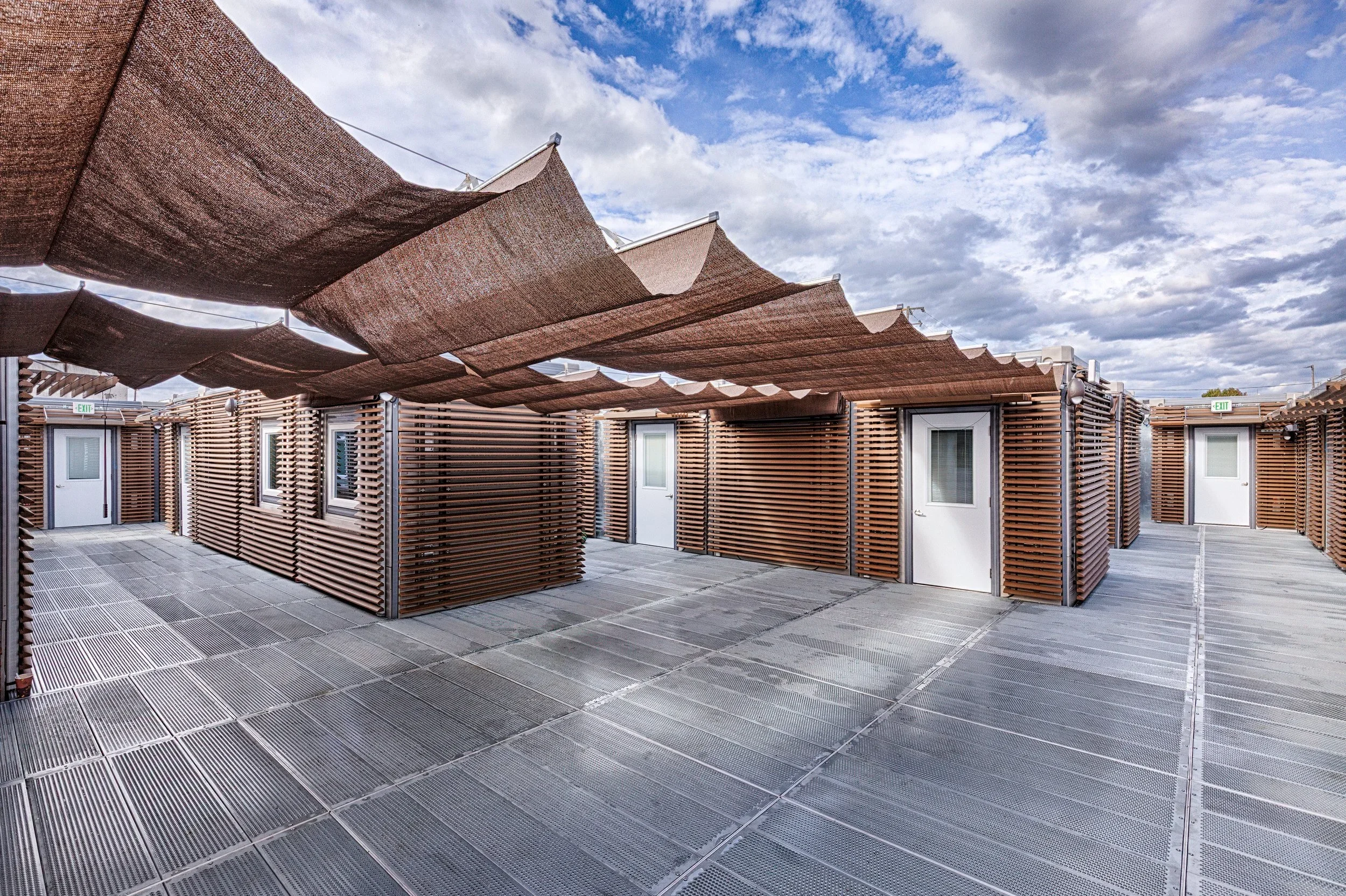
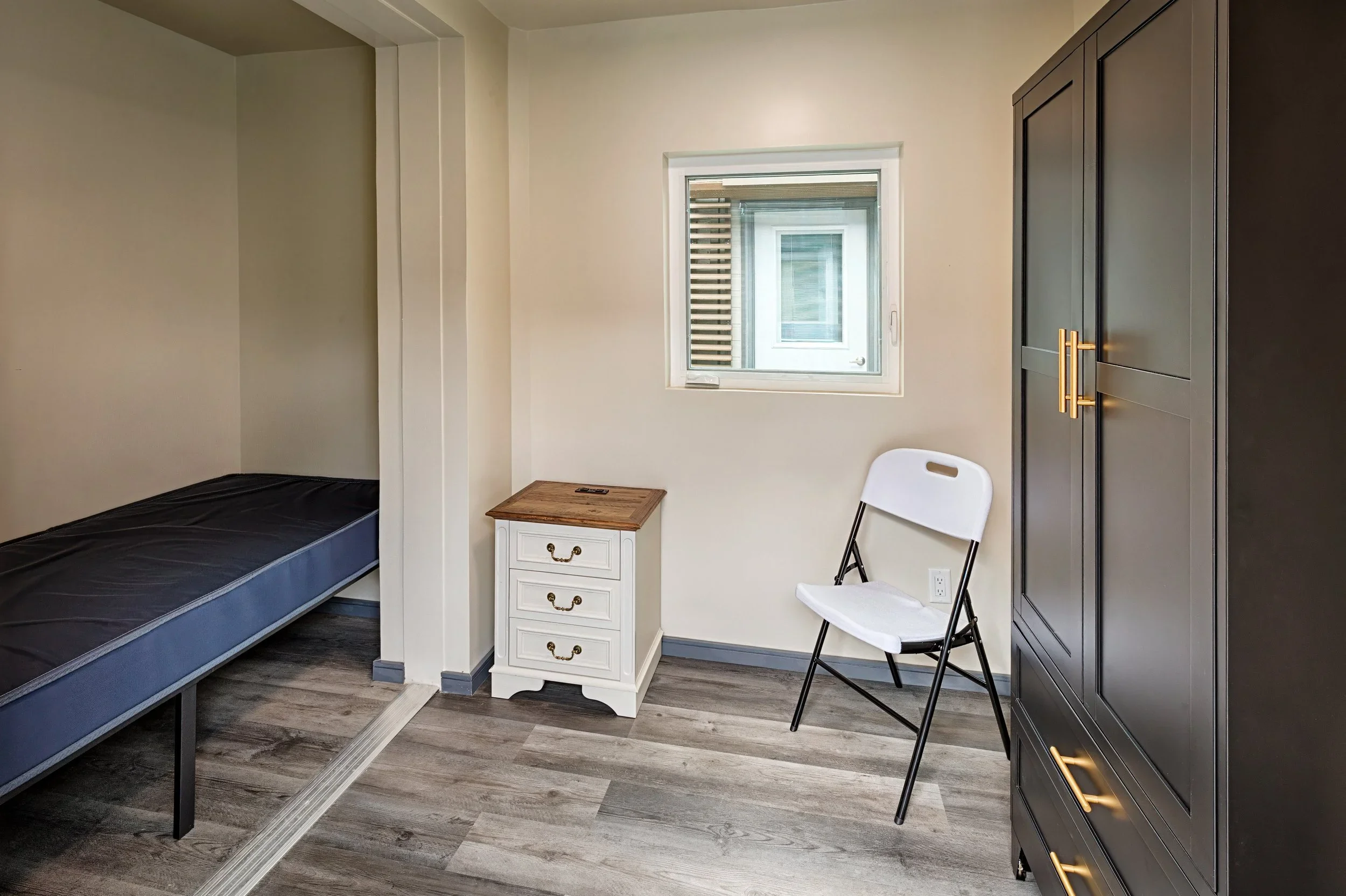
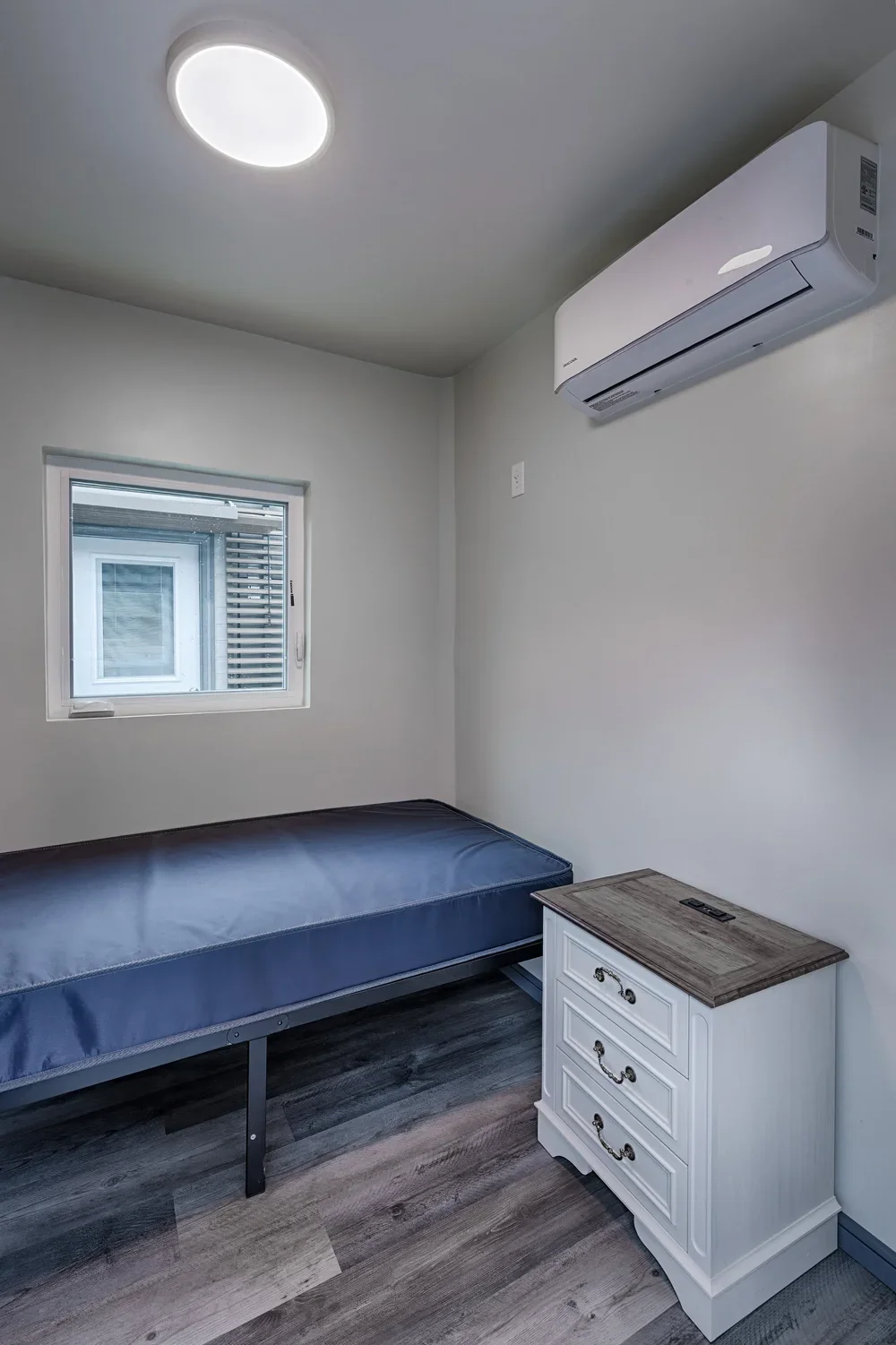
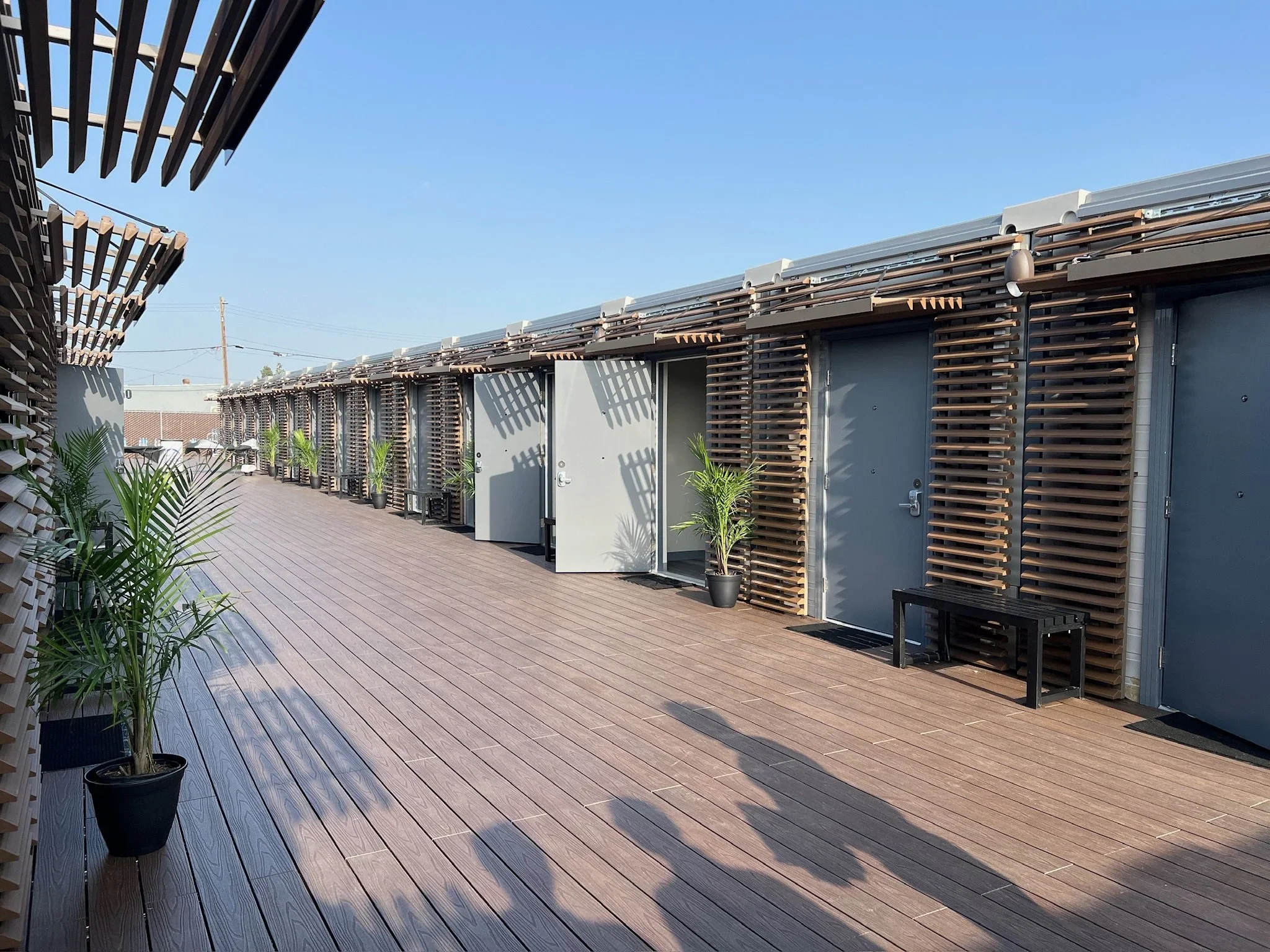
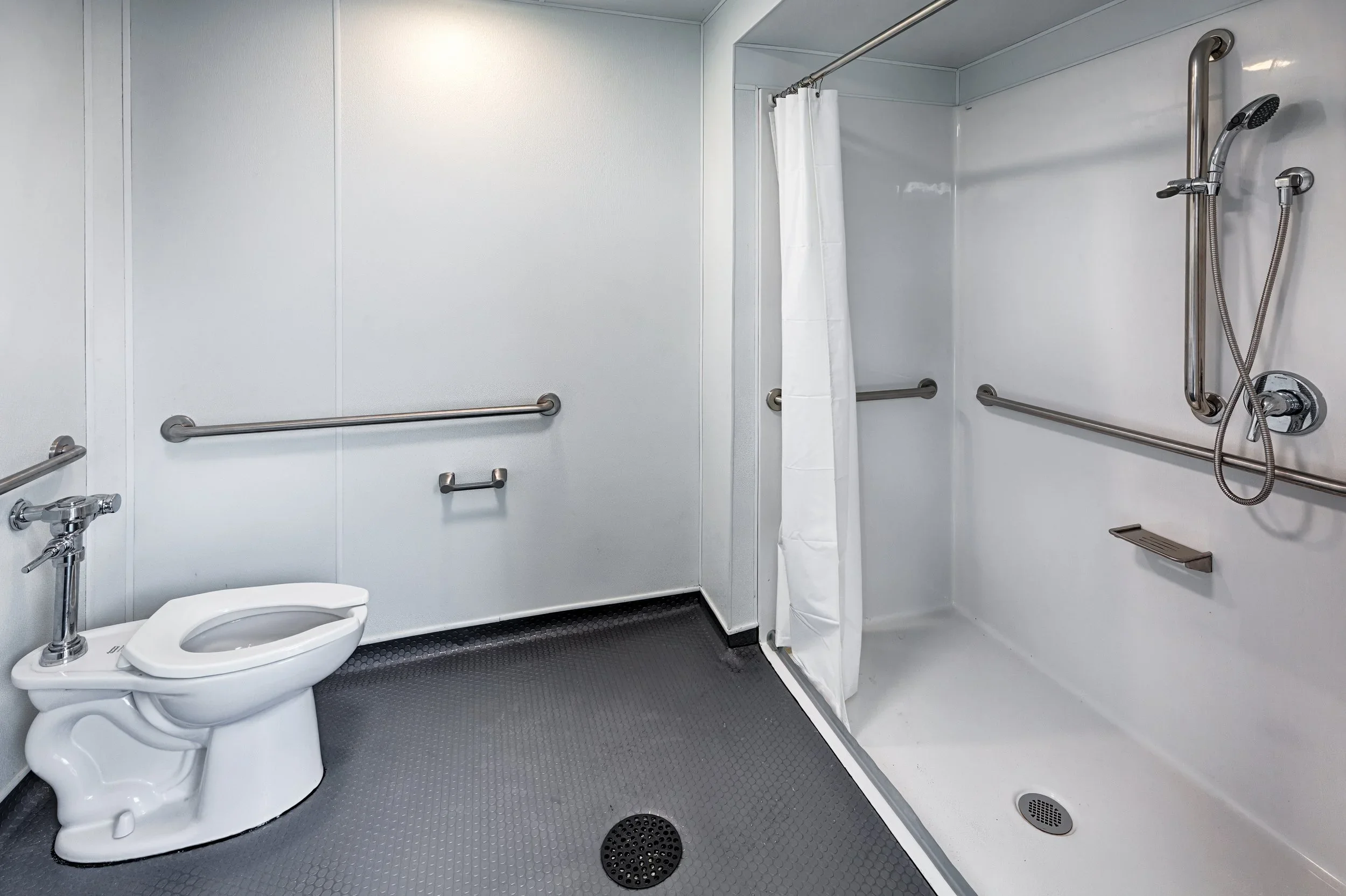
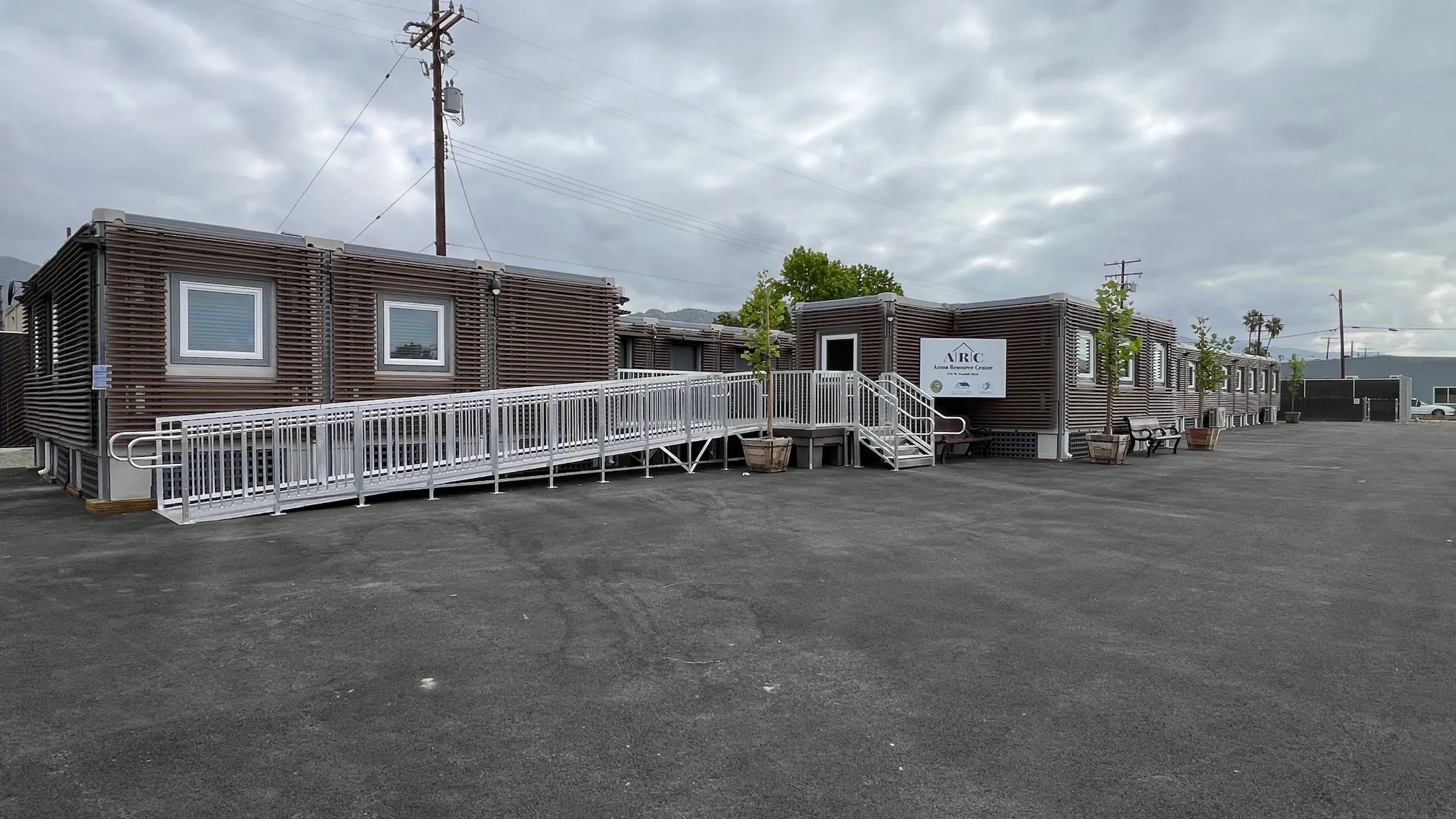
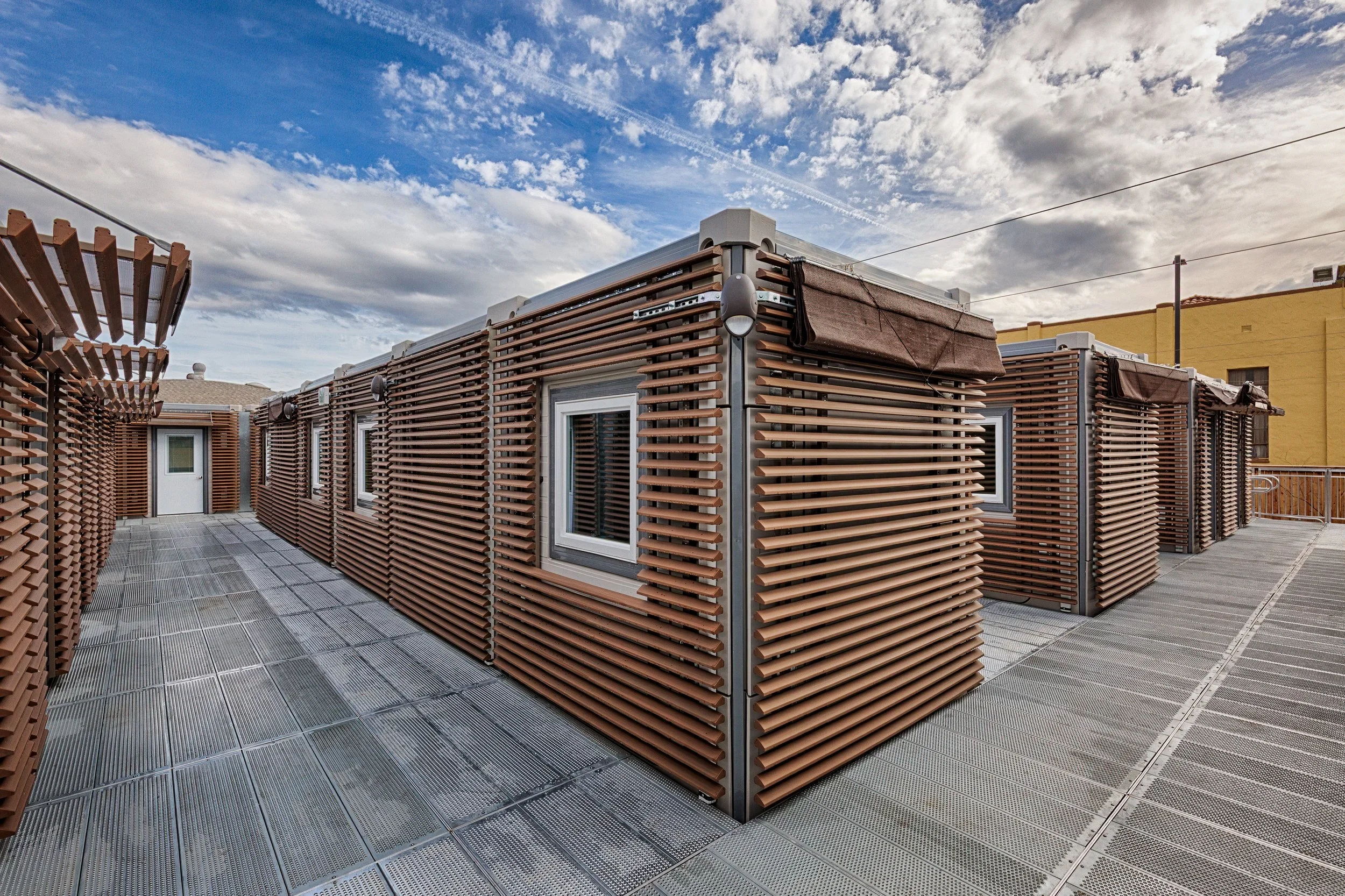
The LifeArk system was engineered, tested and certified in California, one of the most demanding regulatory environments in the world, and put to work on the state's hardest housing problem. More than a thousand LifeArk modules are now deployed, housing people who were previously unsheltered
Certifications and testing: IAPMO ER-560 evaluation report, California HCD factory-built housing approval, Class A fire performance, seismic testing including the full-scale shake table program, wind and cyclic load testing.
California homeless housing: navigation centers, transitional housing and permanent supportive housing across multiple projects
A Fourth Way to Build:
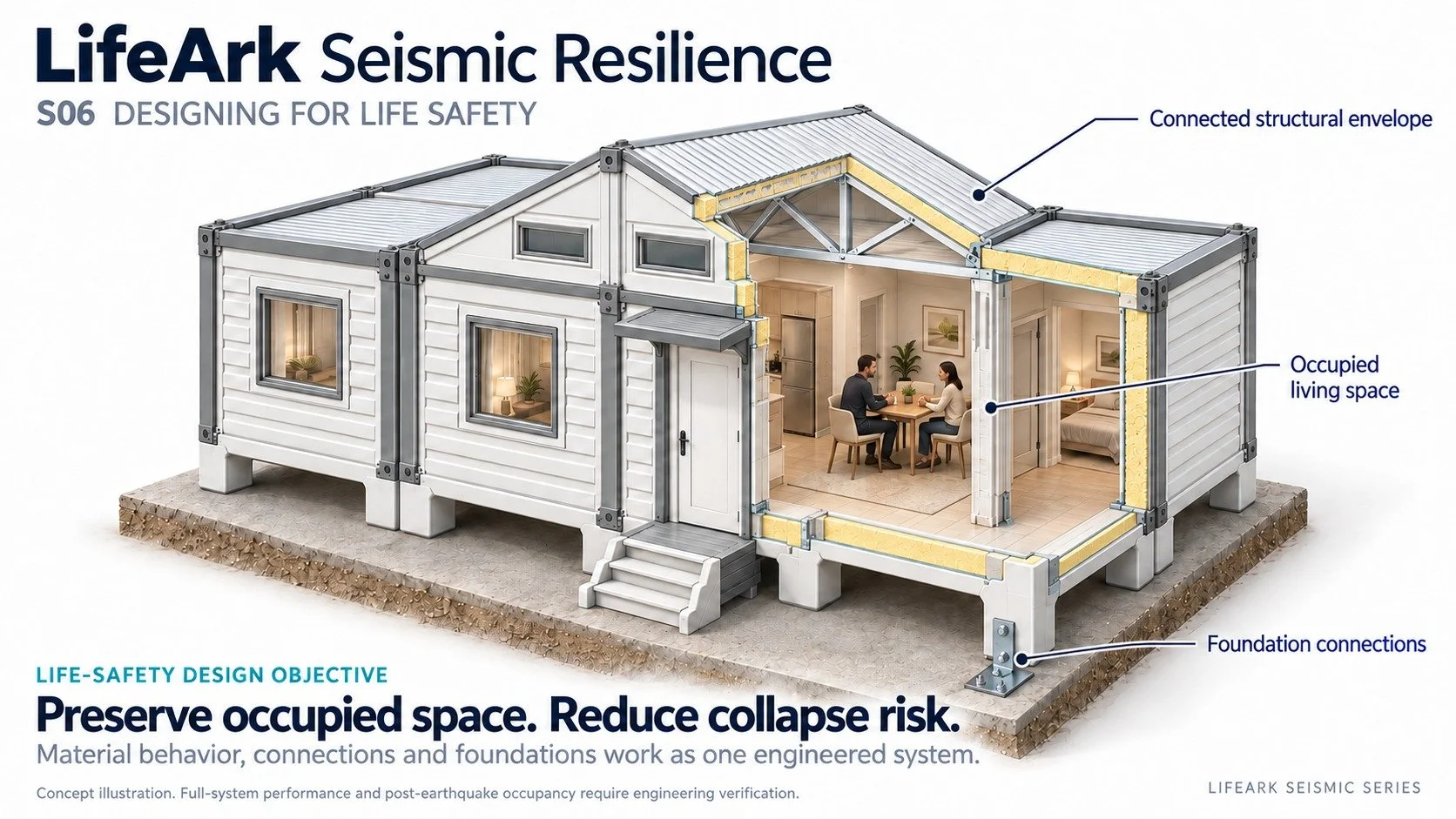
Concrete, steel and timber have built the world's housing for a century. LifeArk's homes are molded from high-density polyethylene, the same family of polymer used in water tanks, marine buoys and pipelines, engineered into a structural building system. It does not rust, rot, absorb water or feed termites. It is insulated within the molded shell, resists fire by assembly, and carries seismic loads through a continuous shell rather than a frame
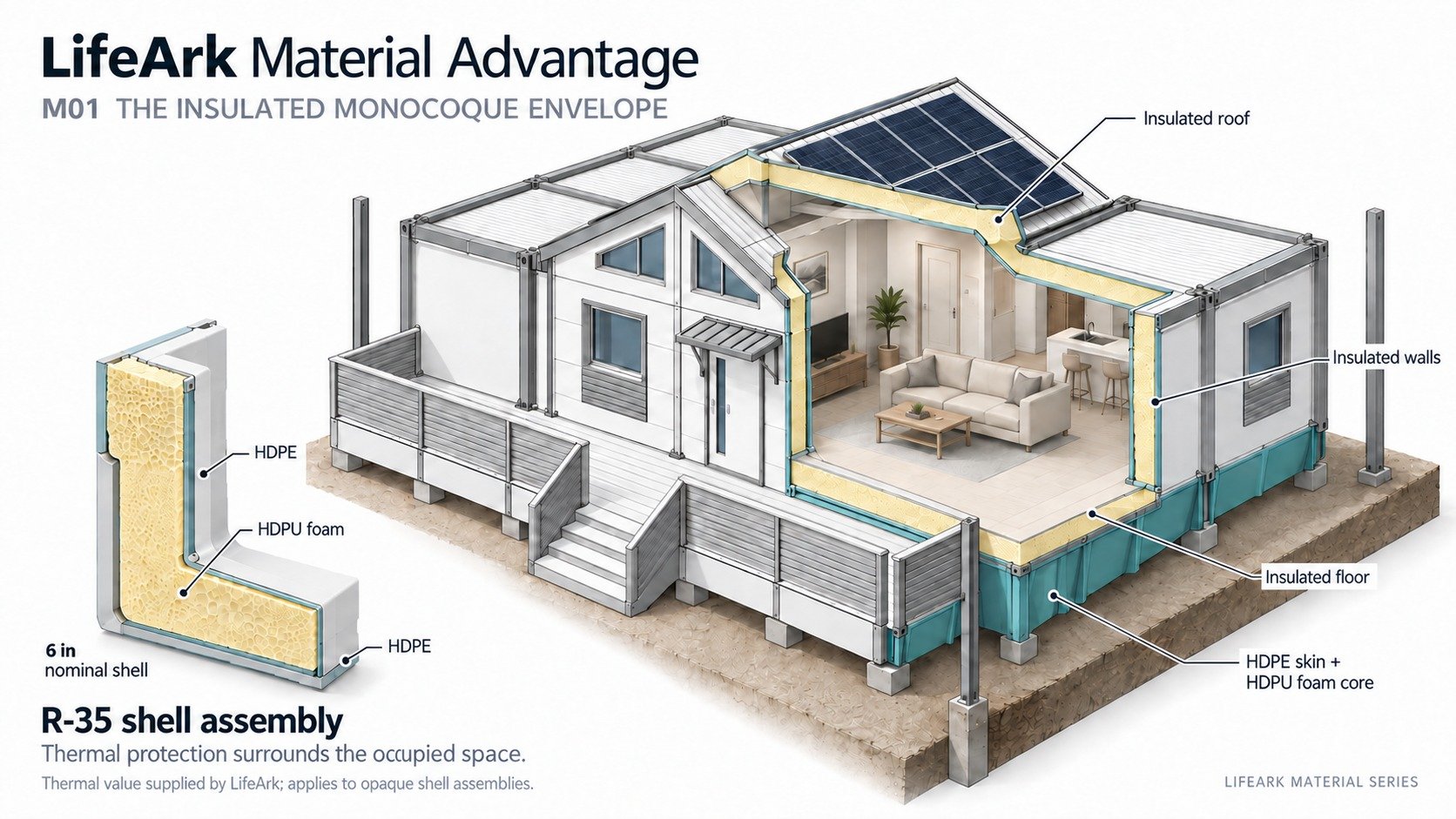
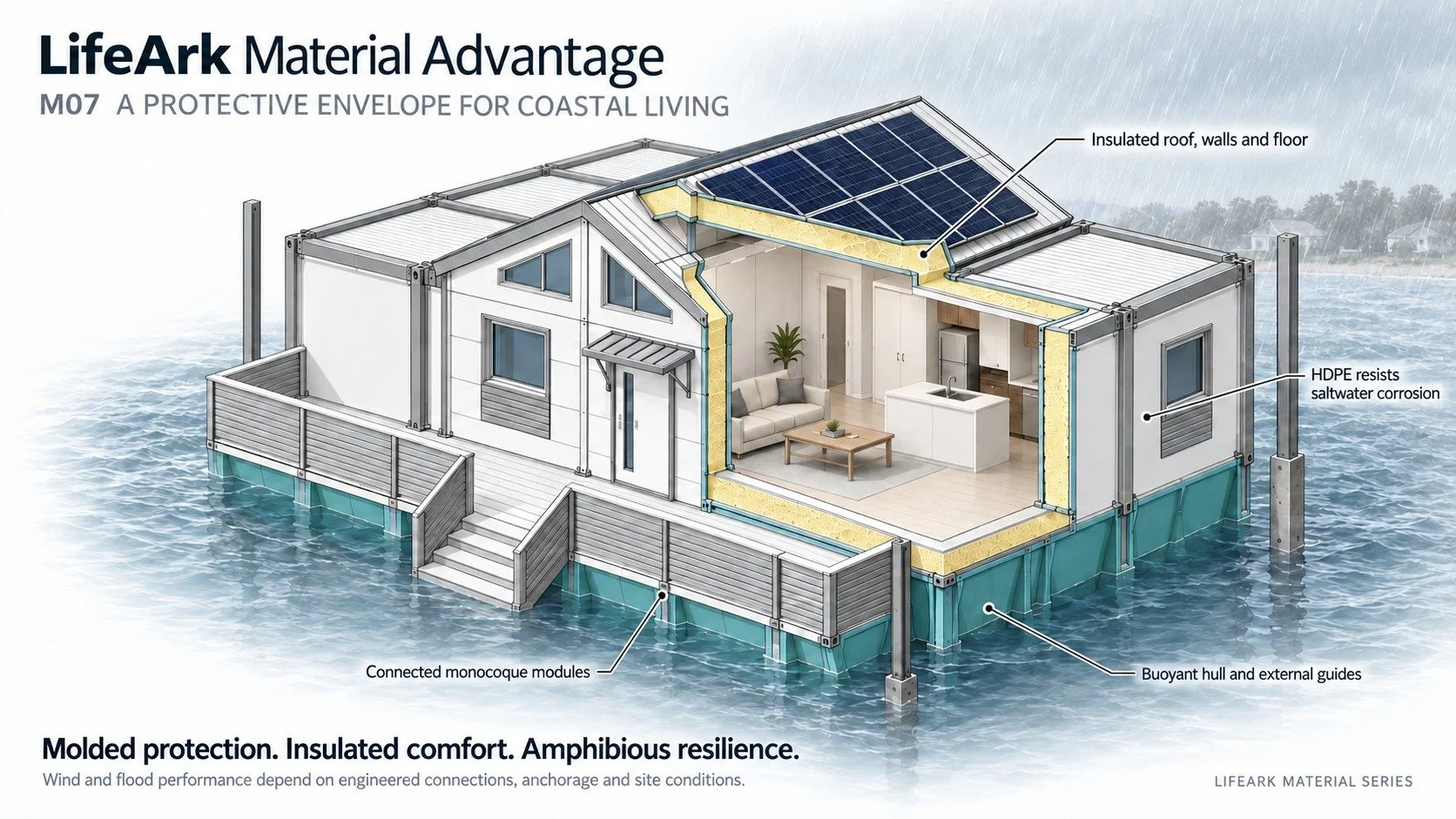
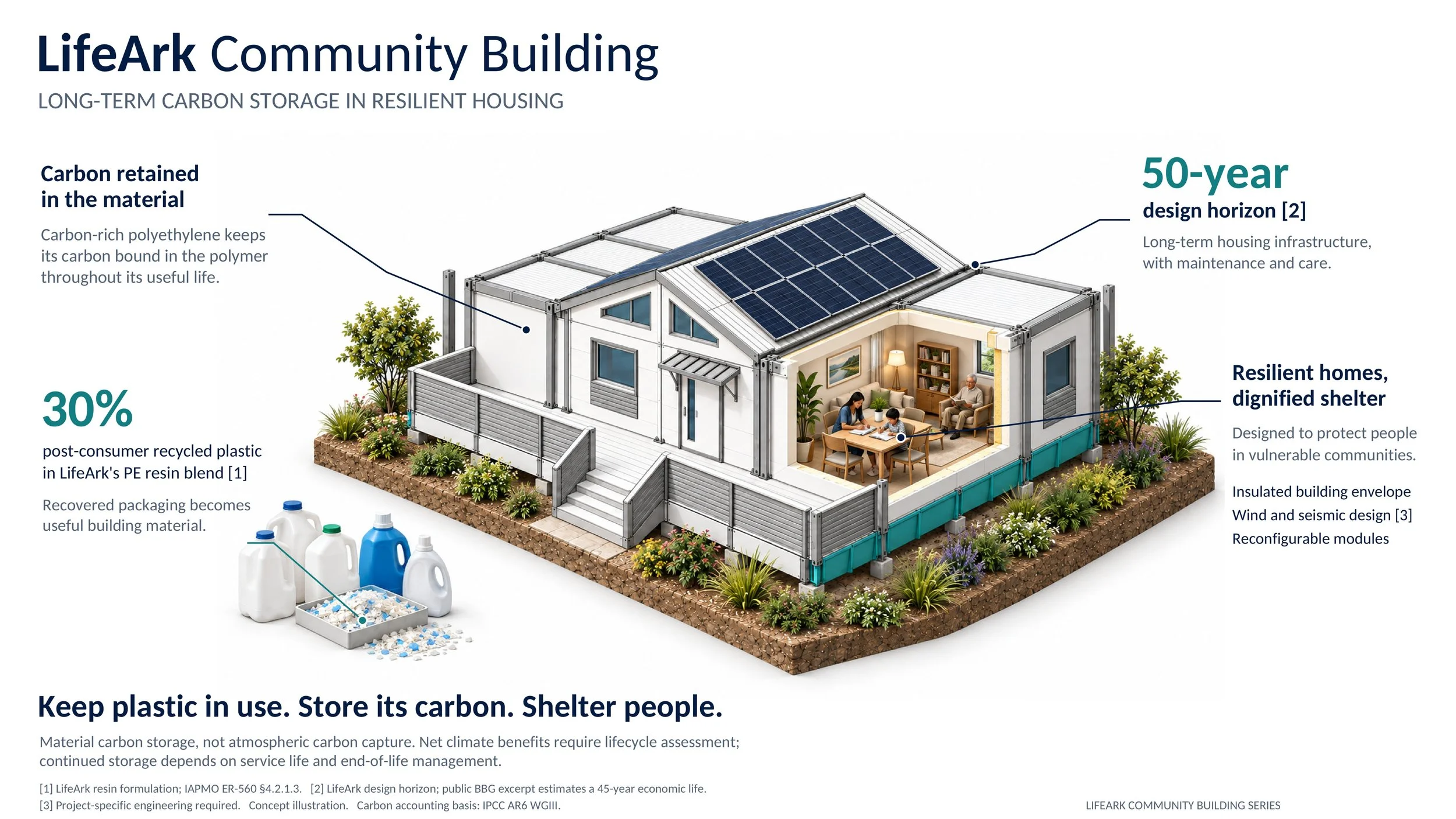
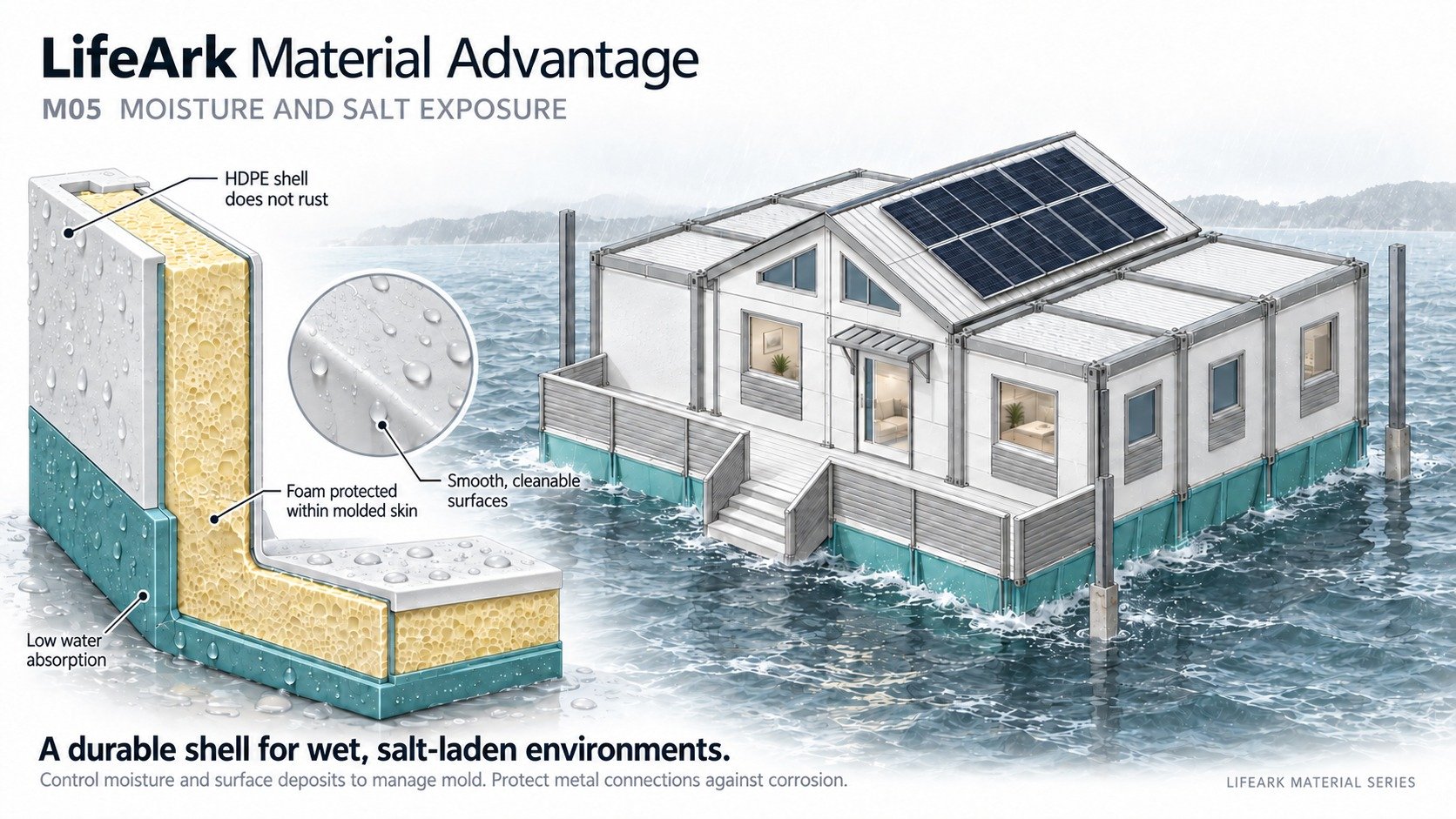
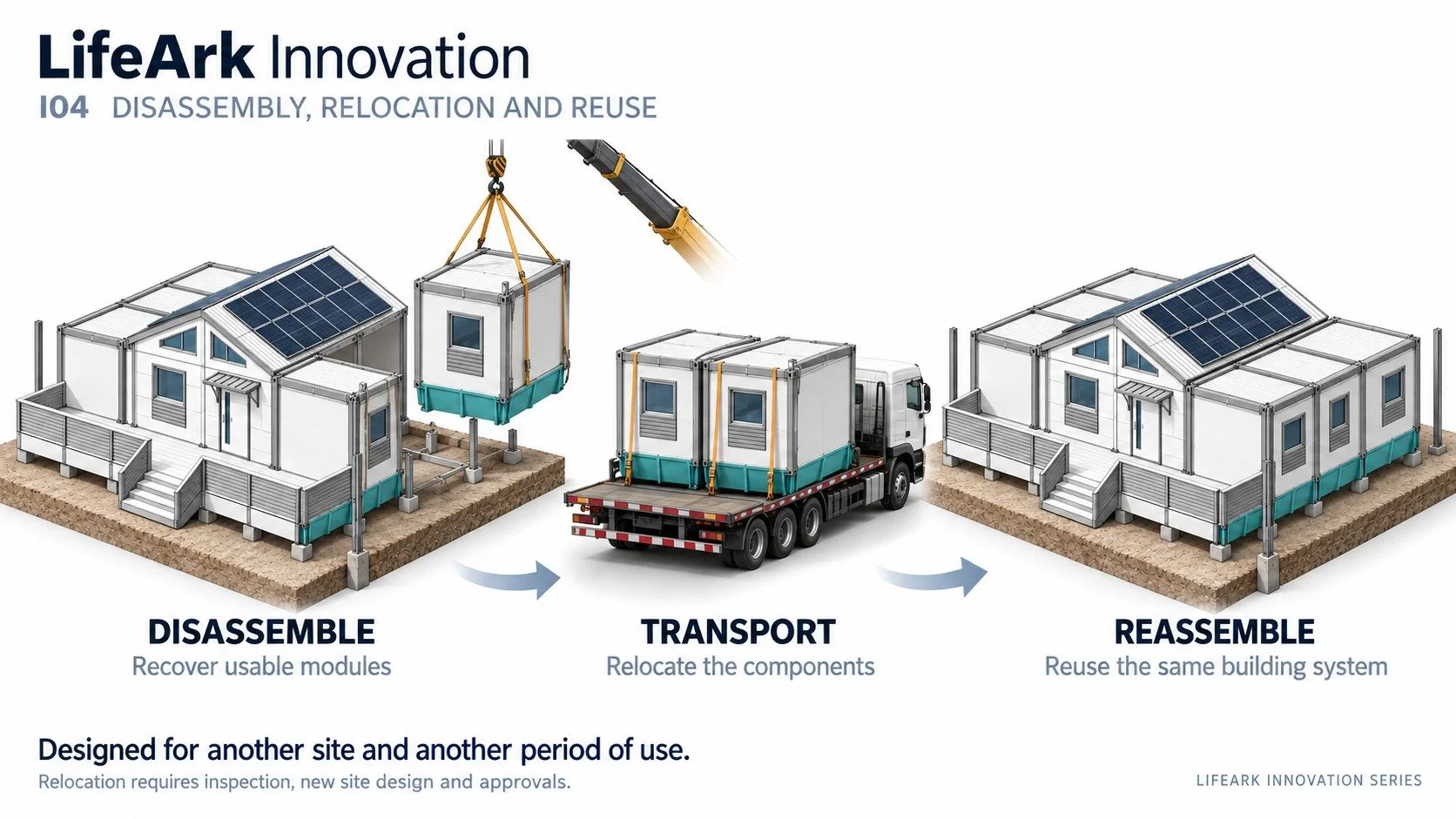
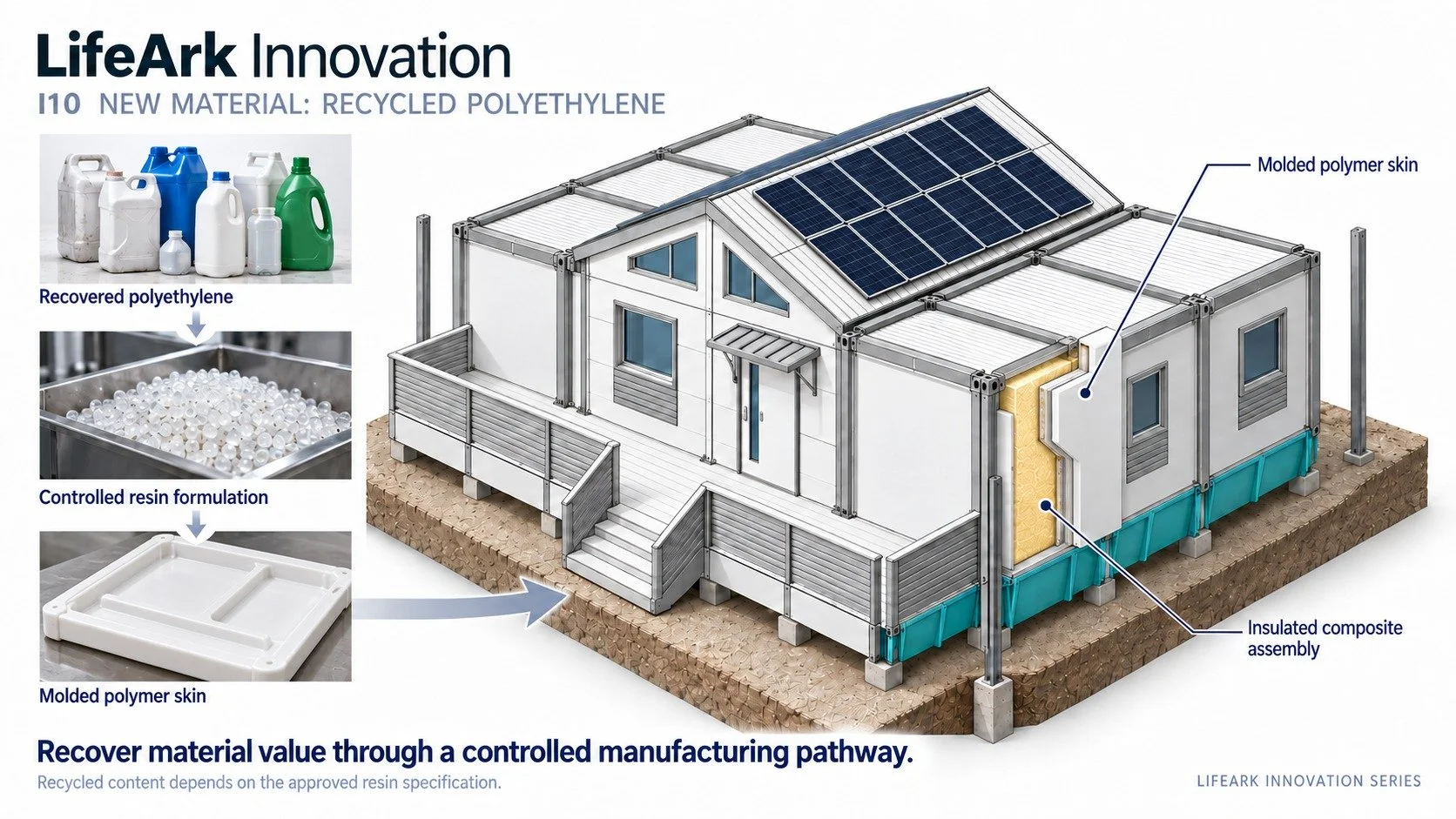
A fourth way to build: LifeArk transforms structural polyethylene into a durable building system designed for places where conventional materials face some of their toughest conditions
Made for life at the water’s edge: The molded shell resists moisture, salt, rot and pests while providing insulation and supporting a comfortable interior environment
Built to last and adapt: LifeArk components are designed for long-term use. They can be maintained, disassembled, relocated and reused as communities and needs change
A more circular material approach: LifeArk can incorporate virgin and recycled polyethylene with the potential for regional material sourcing and local production. At the end of its service life, the polymer can be recycled again
The LifeArk System:
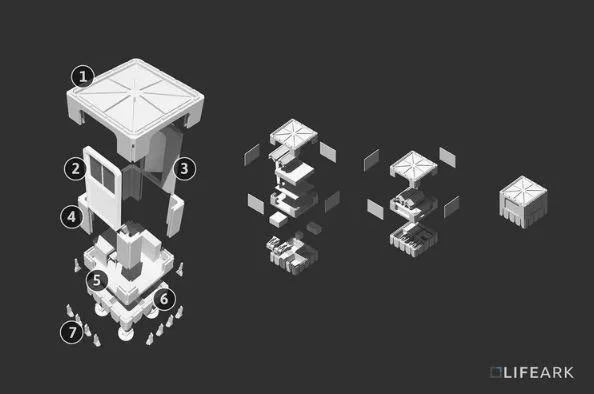
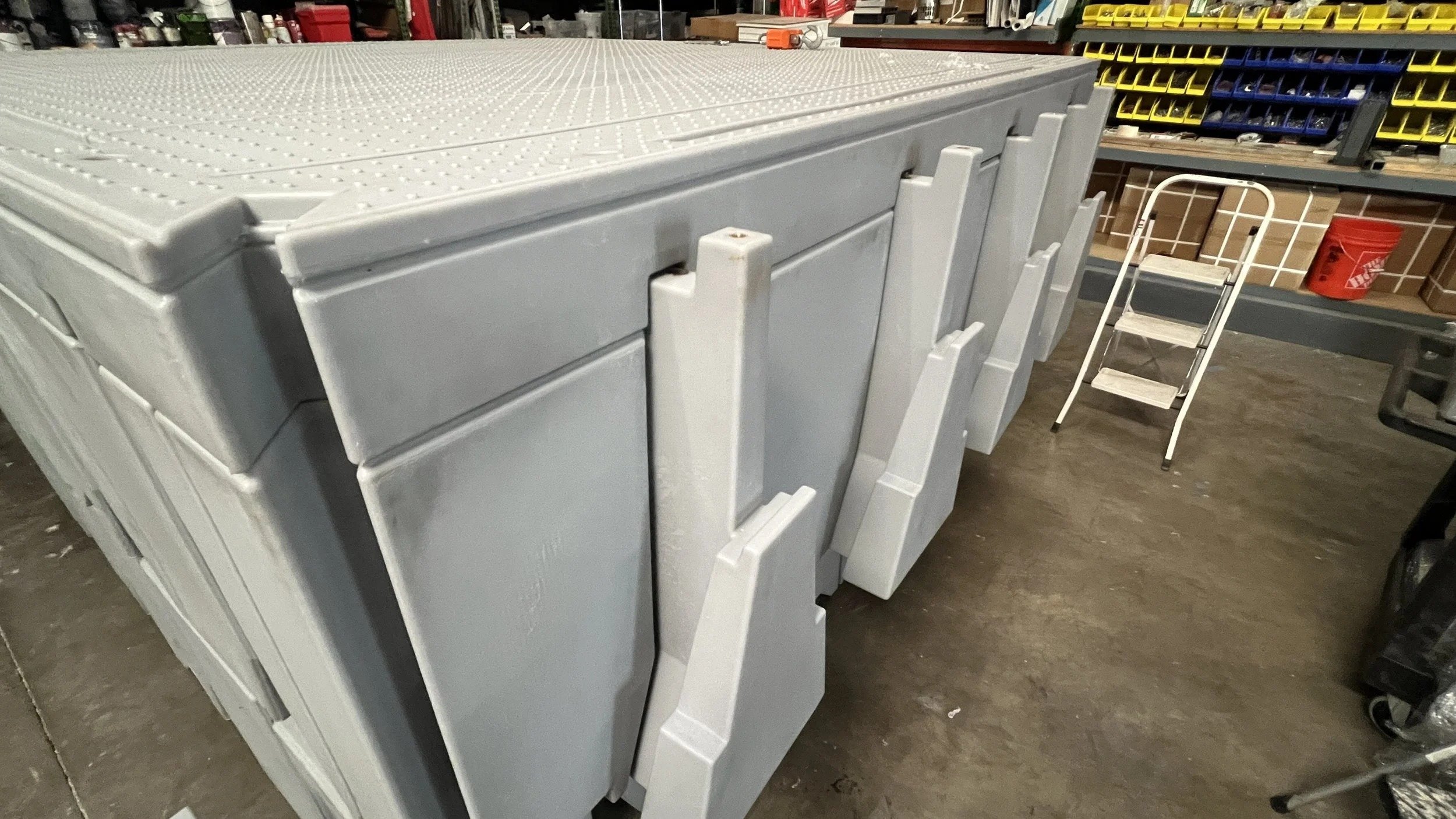
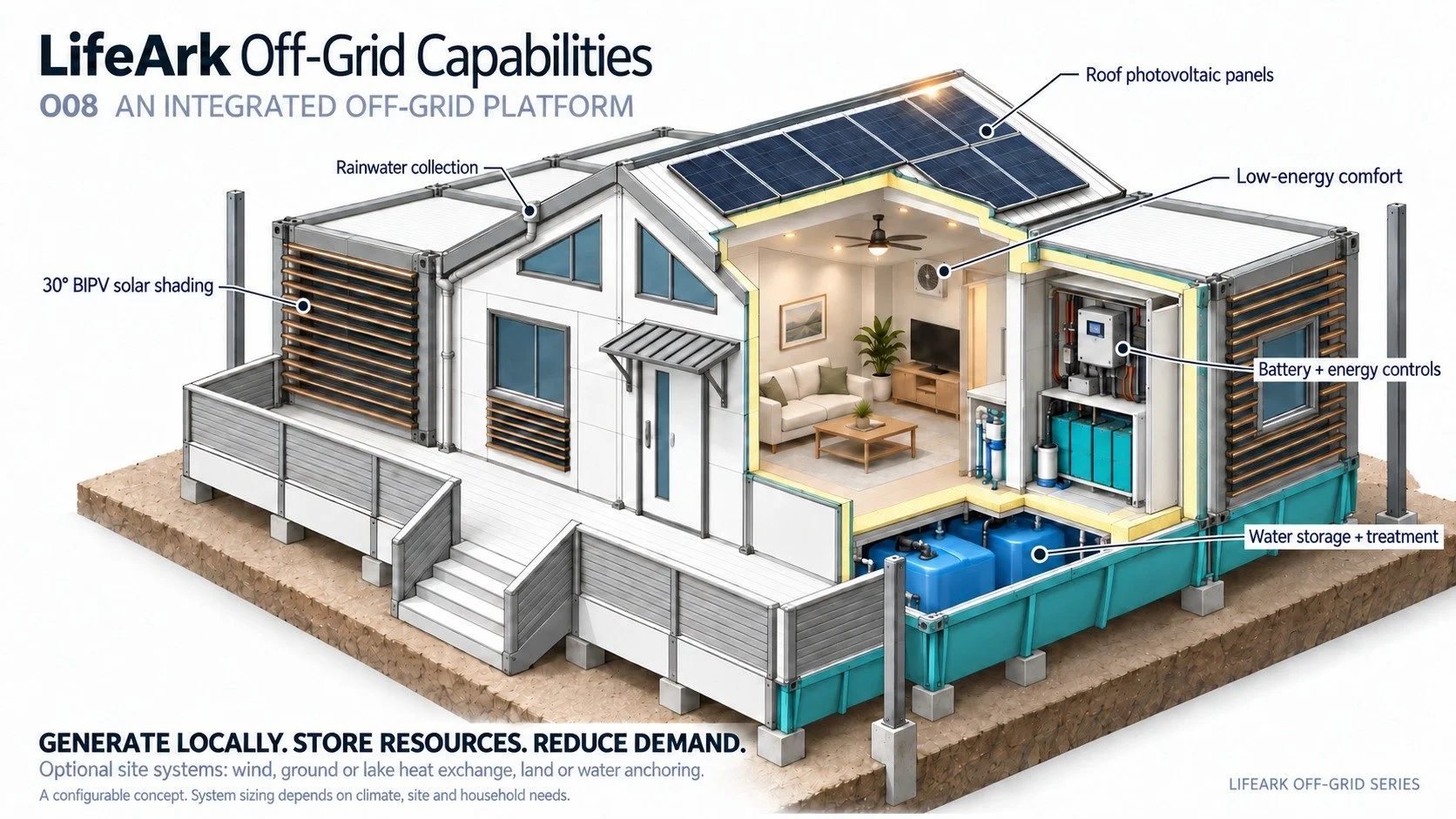
Every LifeArk home begins as a small number of molded parts that pack flat, ship in standard containers and bolt together with hand tools. The same parts make a home on land, an amphibious home that rests on the ground and rises with floodwater, or a fully floating home moored on open water. Seismic resistance, insulation, fire protection and the underfloor utility chase are built into the parts, not added on site. Solar, water storage and treatment attach to the same module, so a single home can operate off grid, and a cluster of homes can share systems as a community.
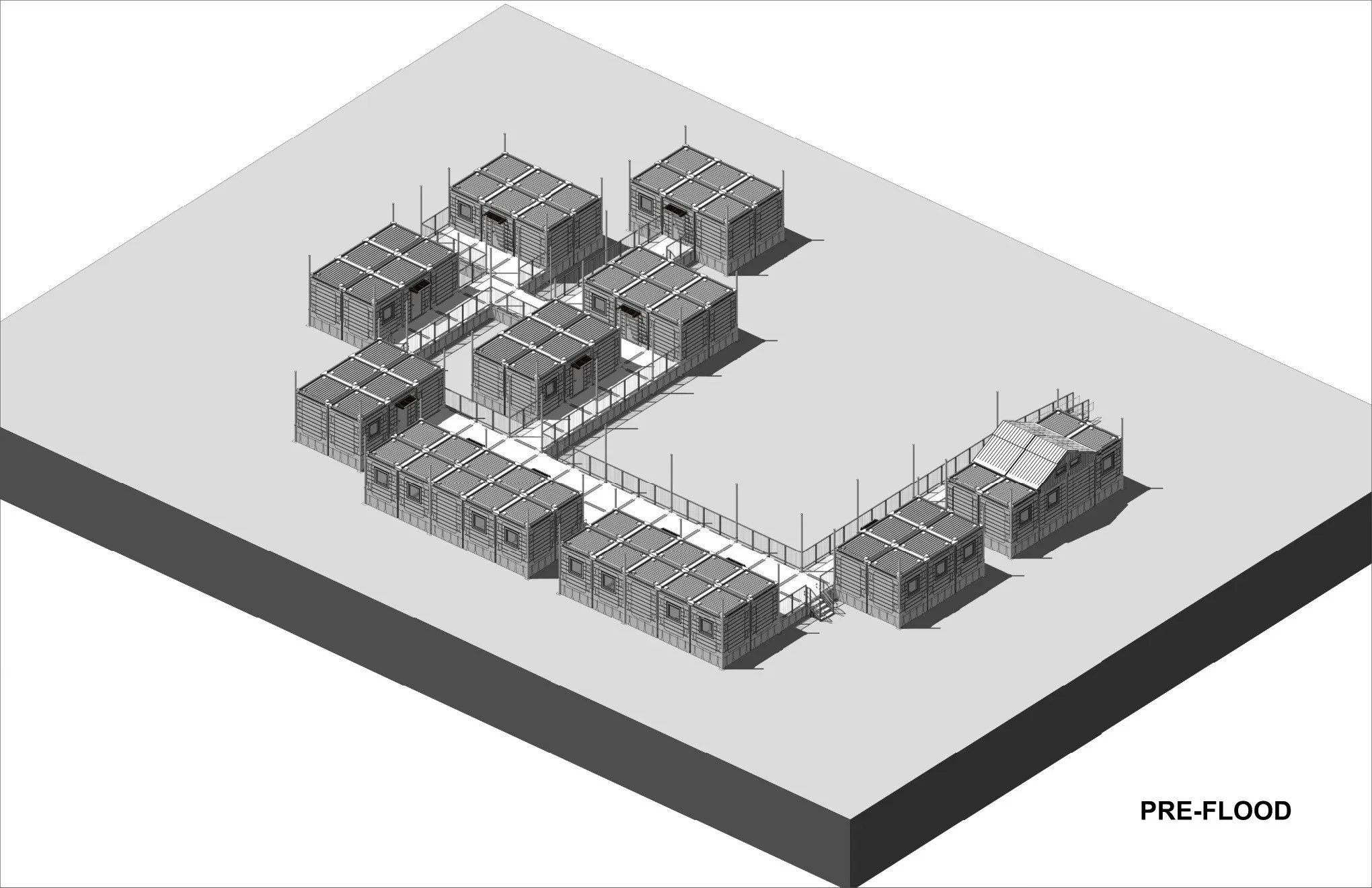
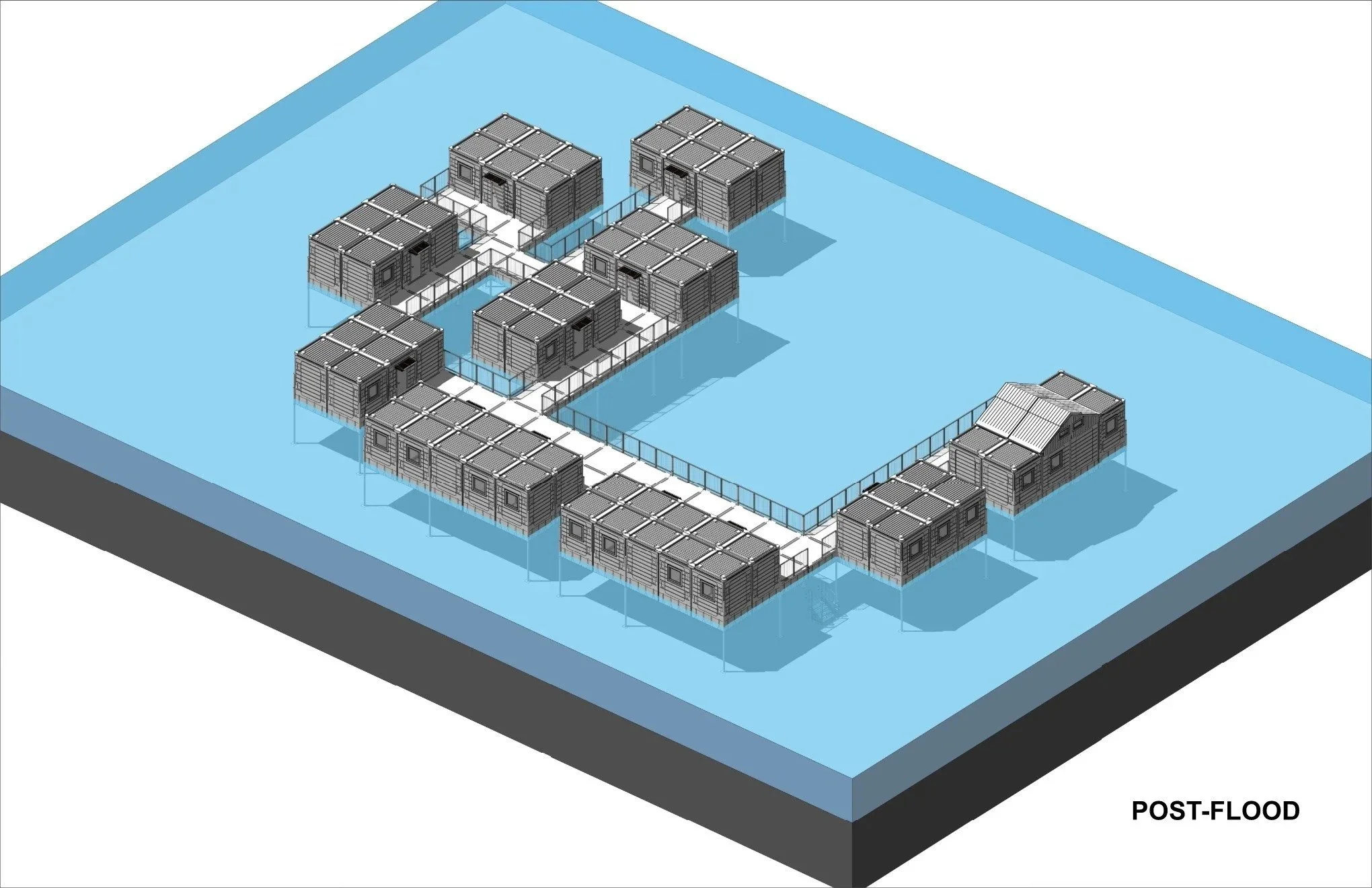
Three foundation conditions from one module: land, amphibious (rest, rise and return) and floating
Made Where It Is Needed:
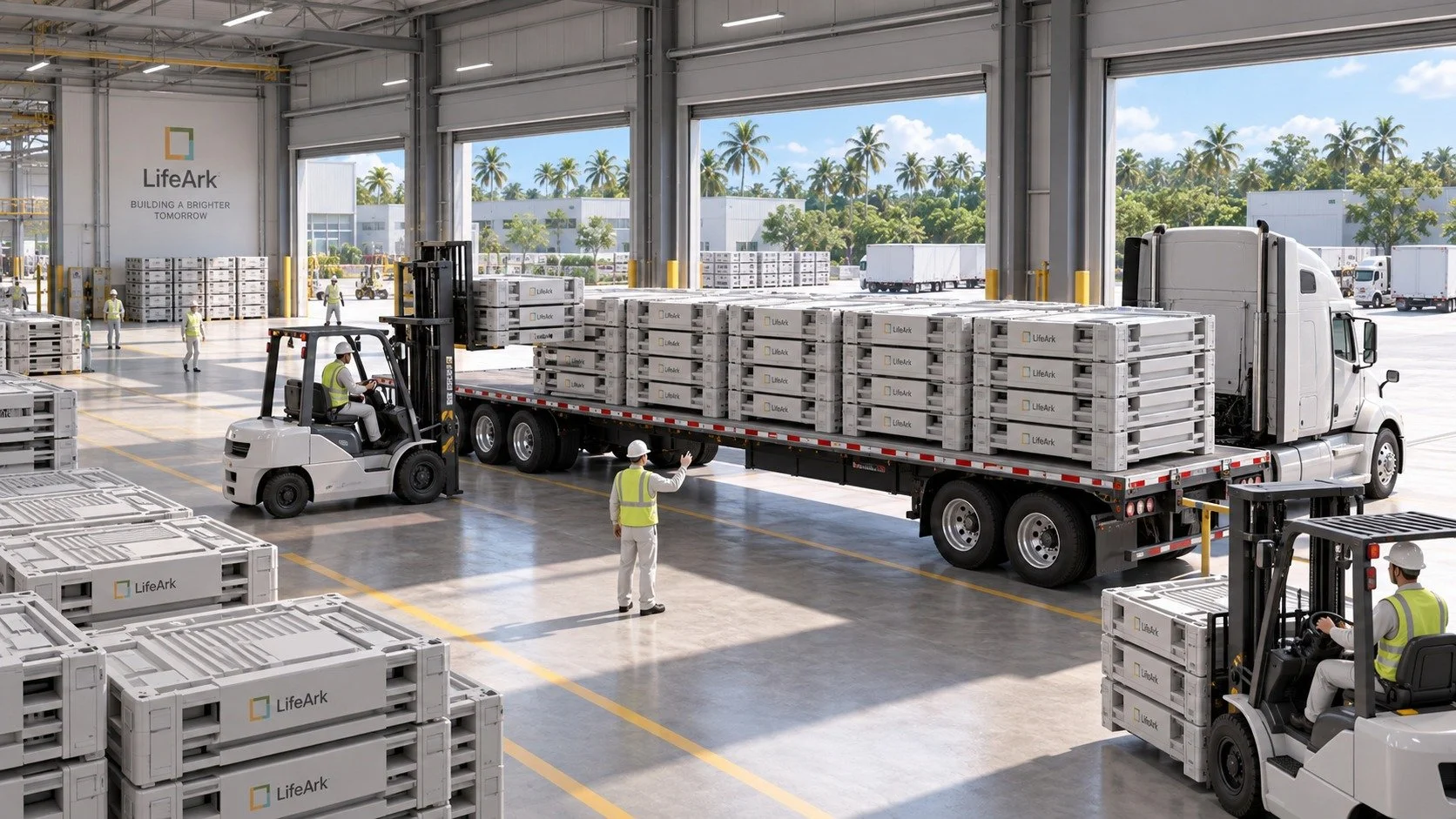
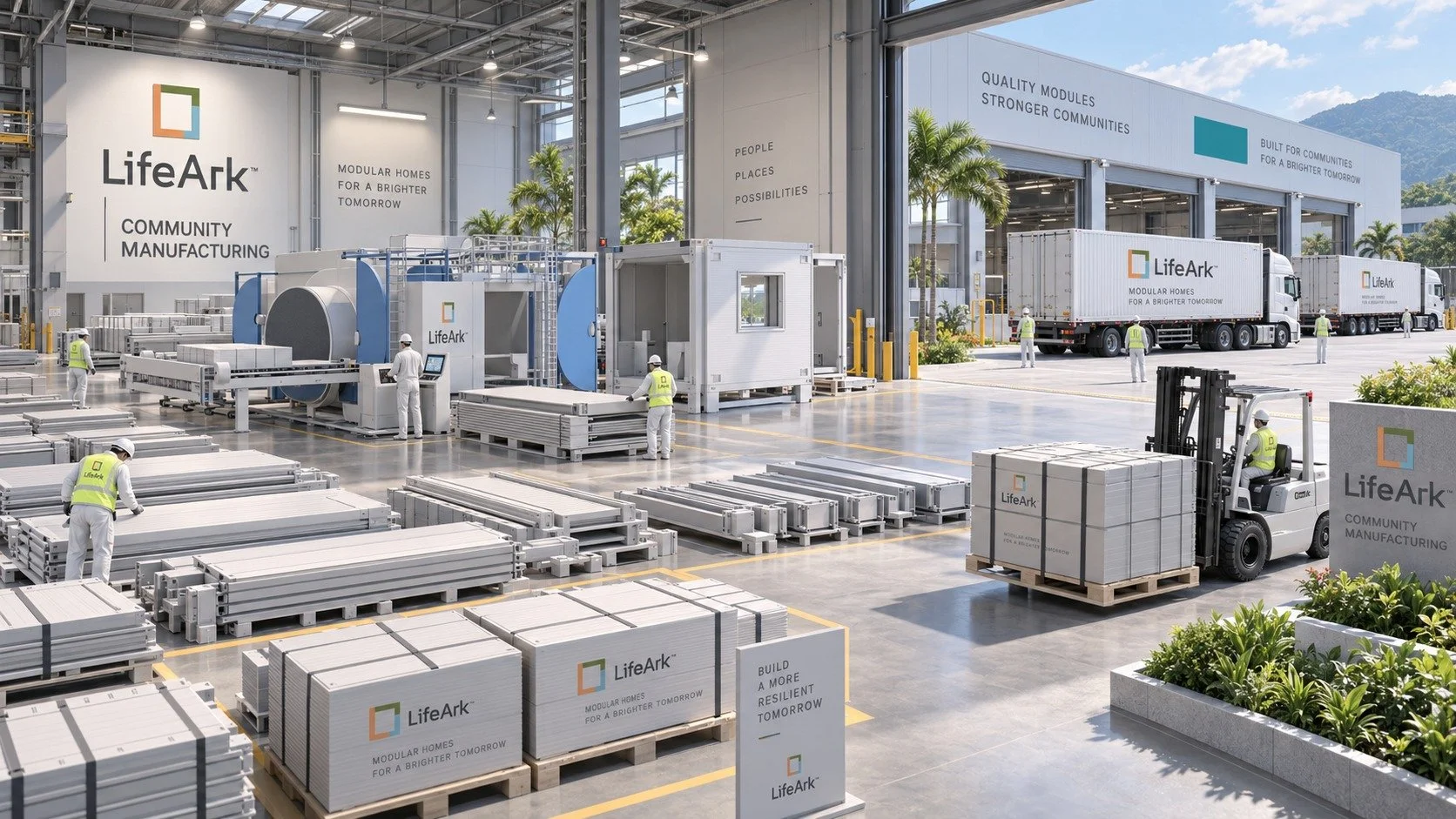
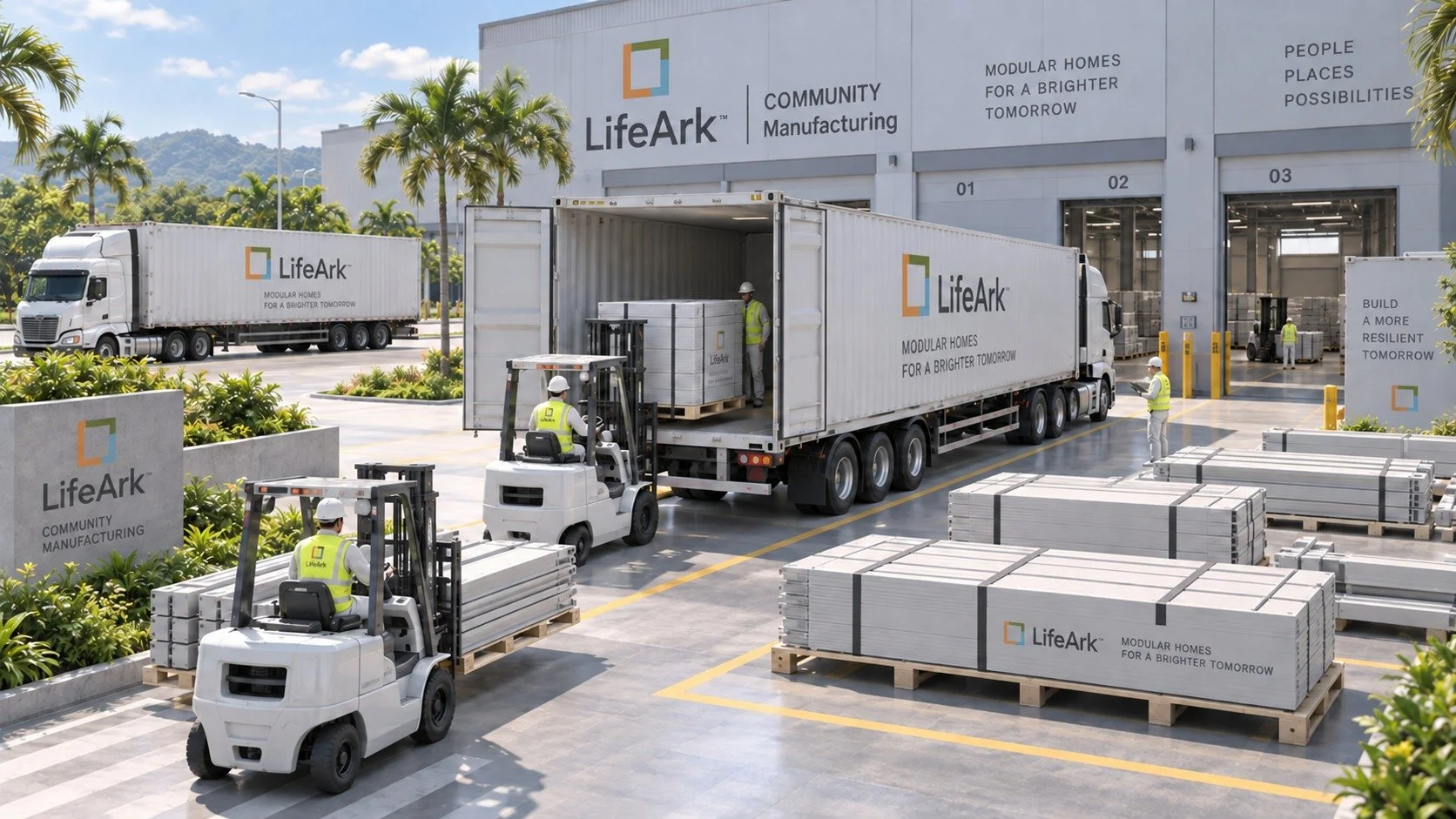
LifeArk is designed for local production. Rather than shipping finished units long distances, the molds can be deployed to regional manufacturing facilities where components are produced closer to the communities they serve.
Using molding processes in established facilities, local teams can manufacture, assemble and maintain the system. This creates skilled jobs, builds long-term local capacity and establishes a manufacturing base that can support both everyday housing needs and faster recovery after disasters.
Efficient molding
Regional manufacturing
From Factory to Shoreline:
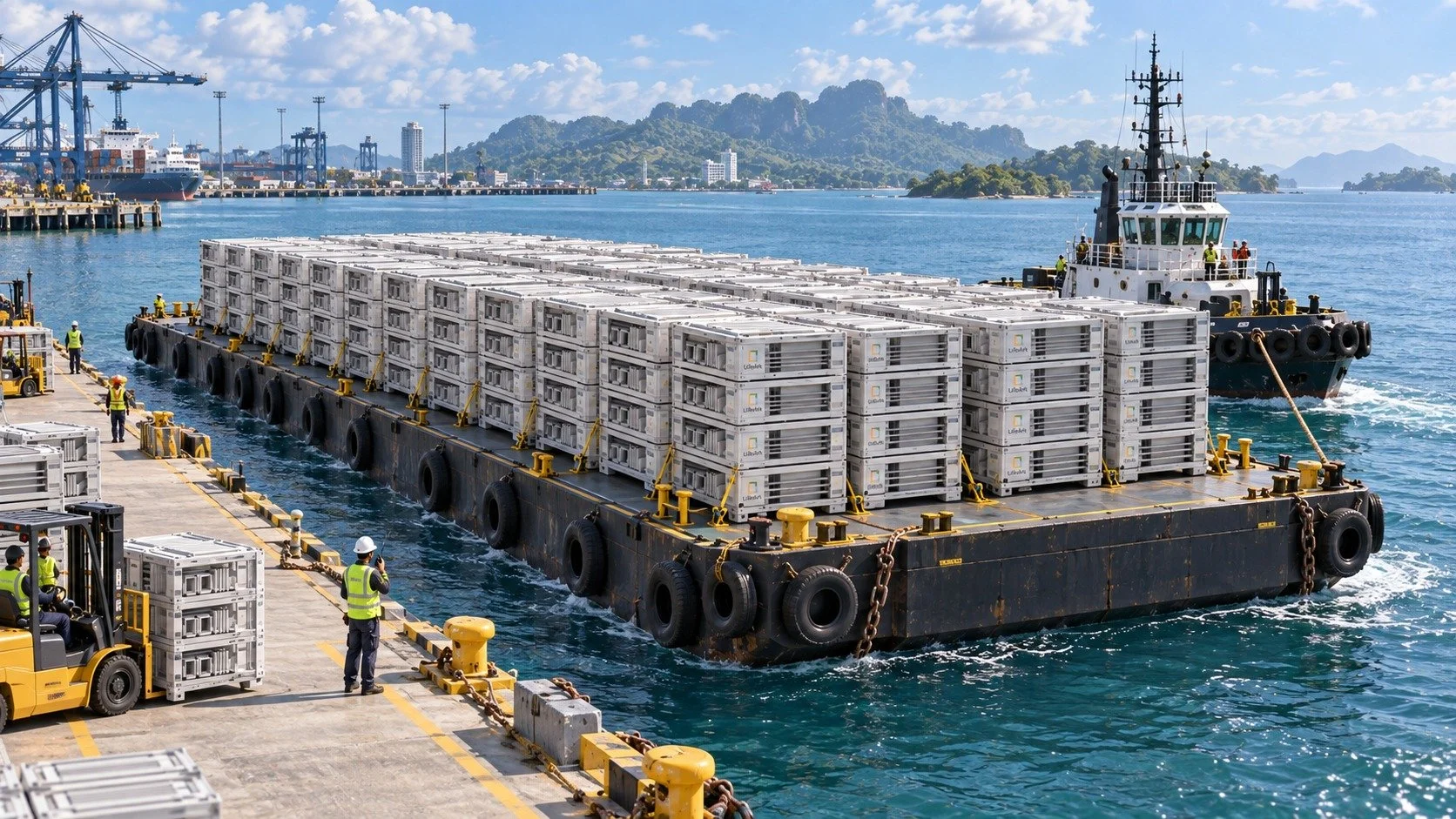
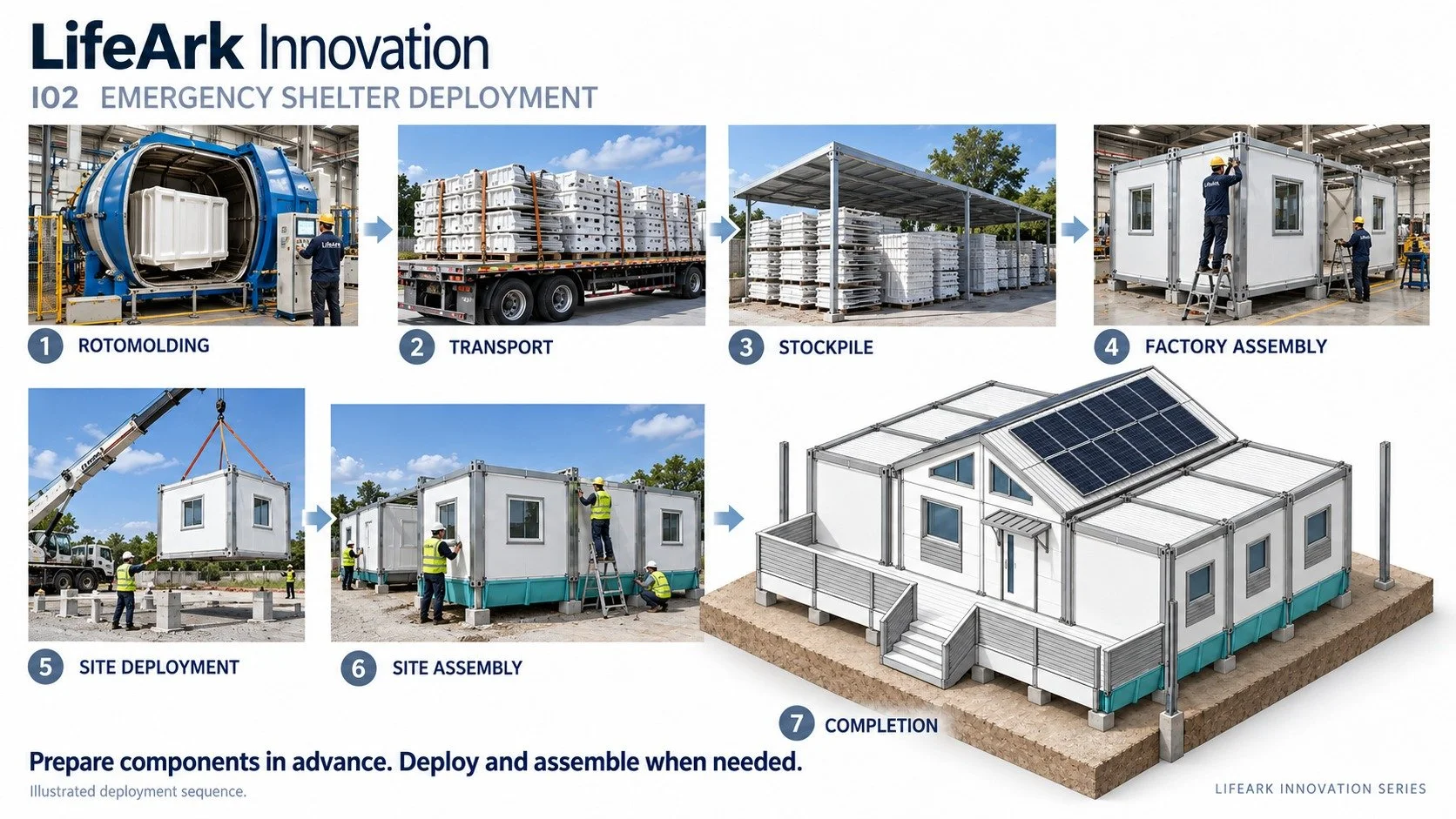
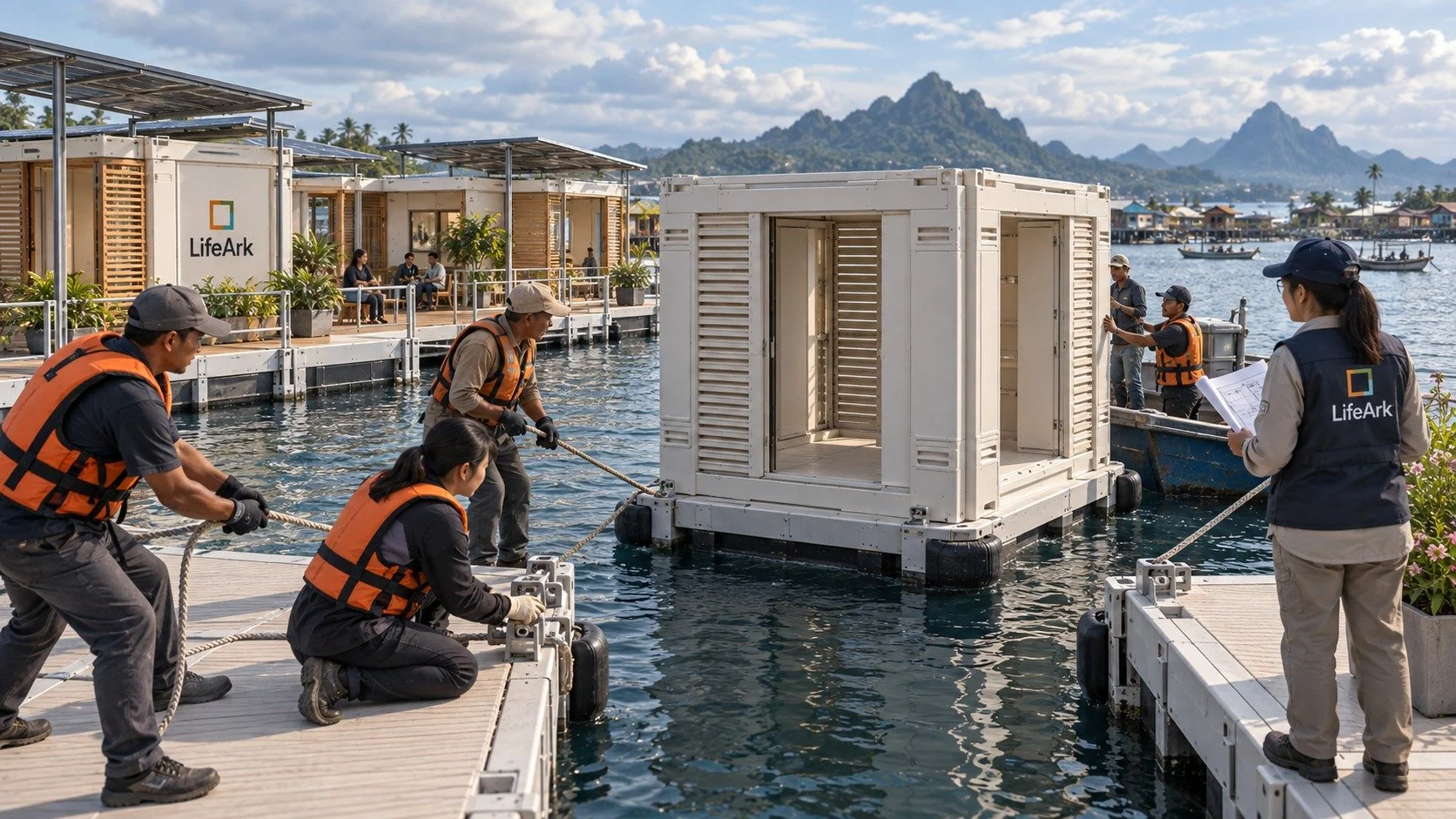
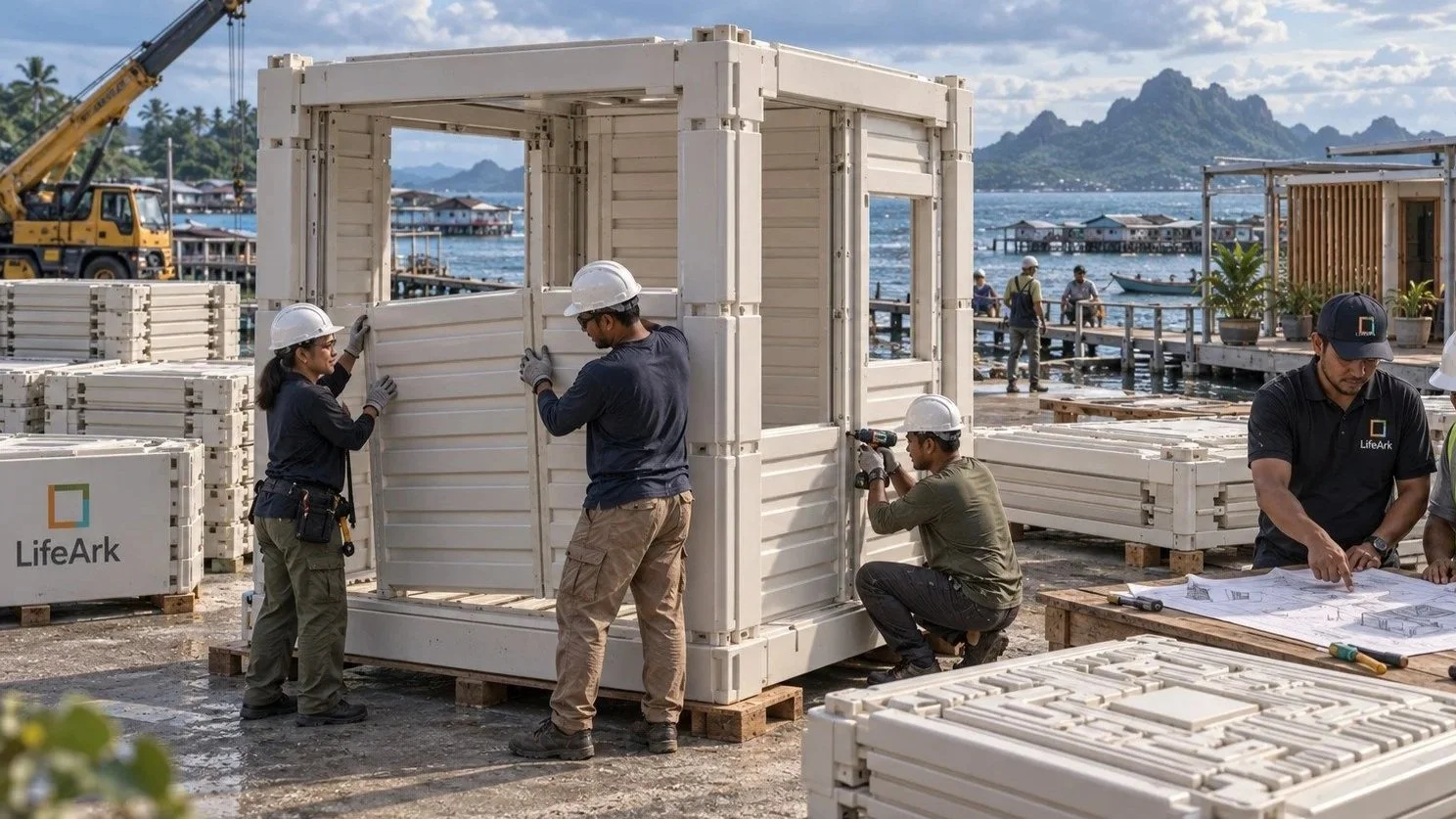
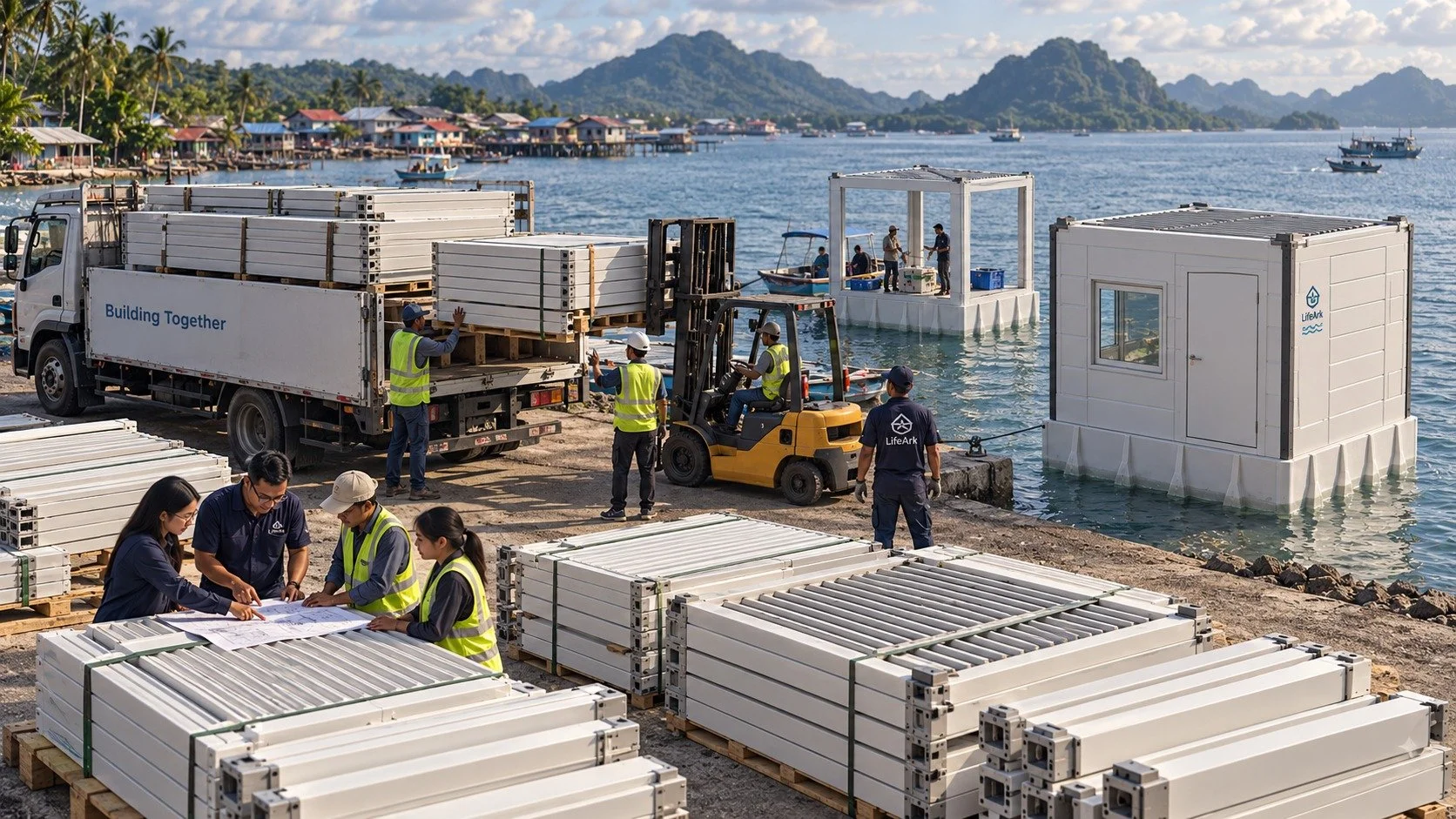
Because the parts pack flat, an entire home ships as a compact kit. Kits move by truck and standard container to a port, then by barge or small vessel directly to the shoreline where the community will live. There, a local crew assembles each module in a shoreline yard, launches it from the shore and floats it into position, where it connects to the walkways, services and homes already in place. The community grows one module at a time, with its own residents doing the work.
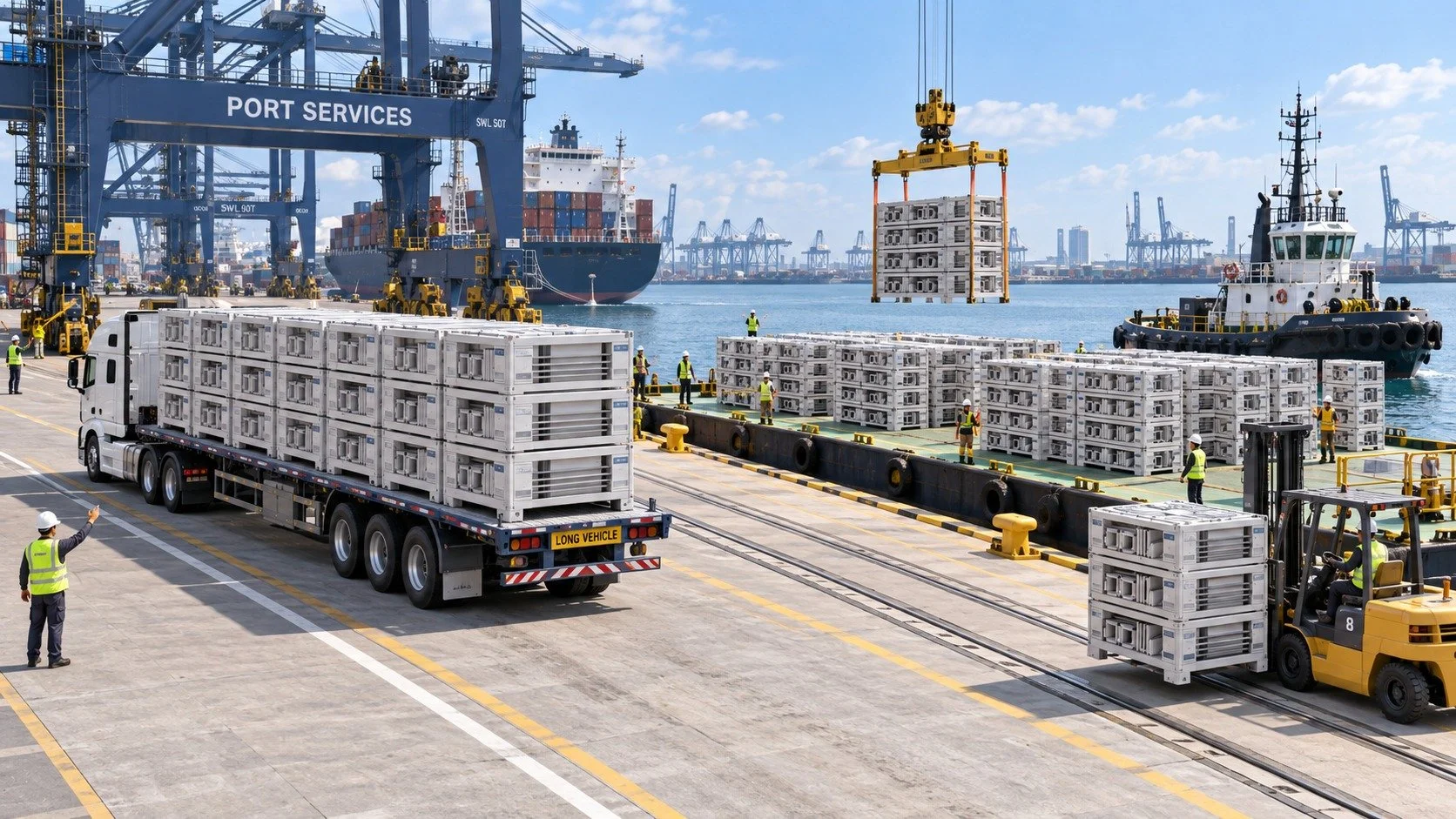
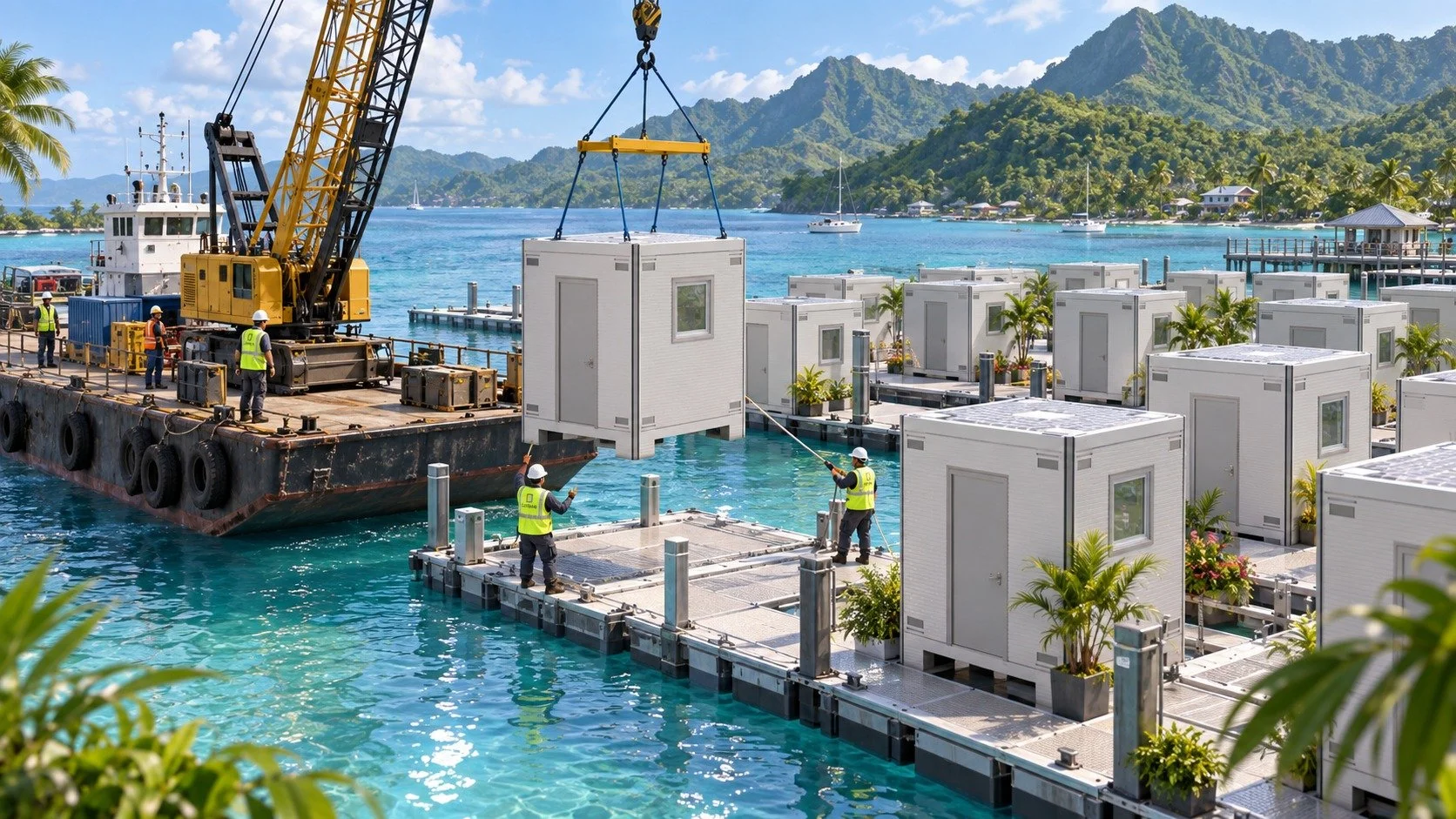
5-Step Delivery Chain: factory dispatch, road and container, port staging, barge and waterborne distribution, shoreline receiving
Shoreline assembly yard: kits arrive, trained crews assemble modules, wall panels installed, module launched from shore
Connection: floating modules guided into place and joined to the platform network; the community expands incrementally
Emergency deployment variant: the same chain delivers shelter clusters quickly after a disaster, and the same modules later become permanent homes.
Amphibious Engineering:
LifeArk platforms are held by guide piles or concealed cable moorings anchored to the seabed, with shared walkways carrying services between homes. Where the settlement meets open water, a wave-attenuation line shelters the neighborhood. At the shore edge, platforms rest on the ground at low water and float as the water rises, so the same community extends seamlessly from land to water.
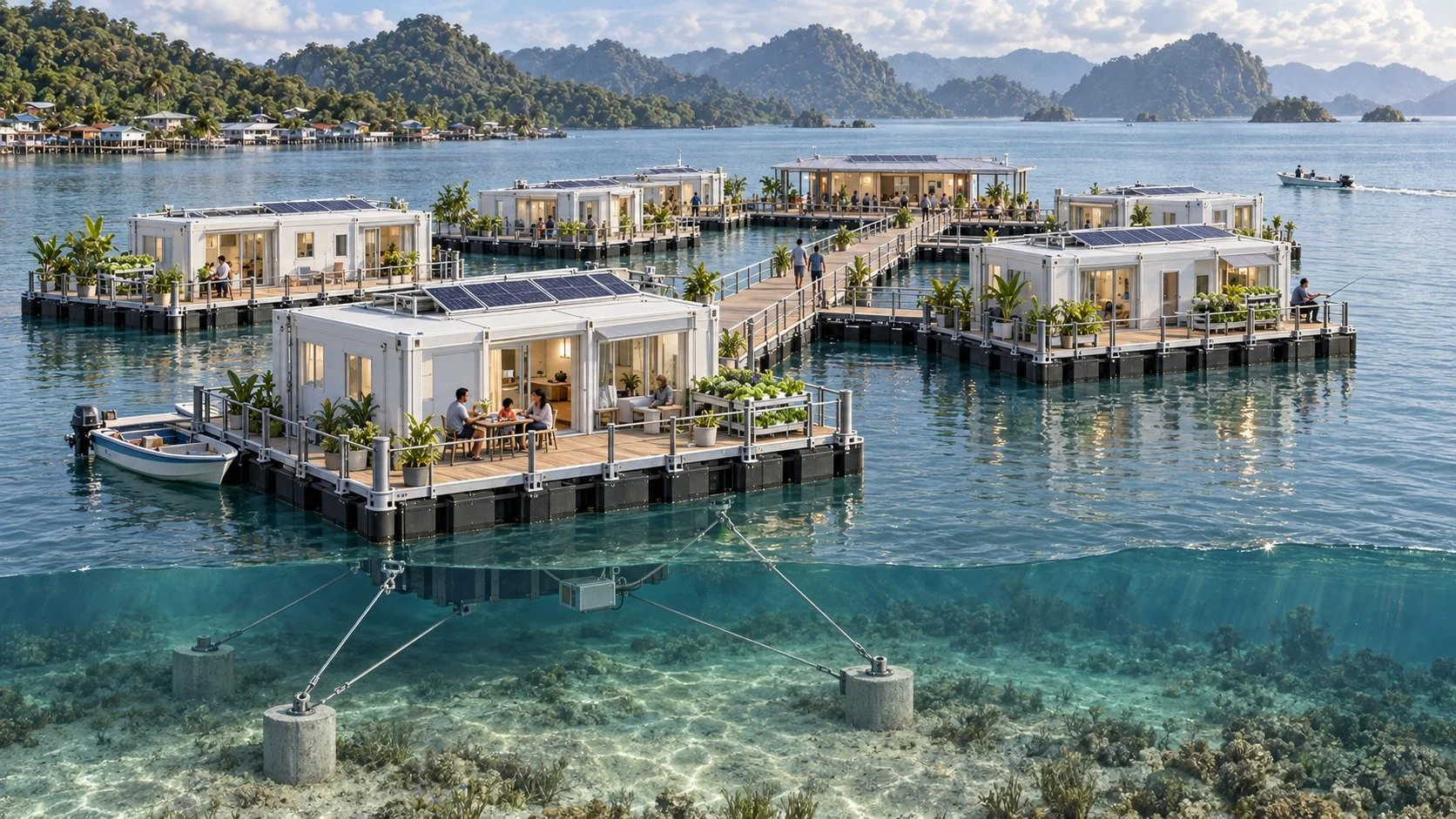
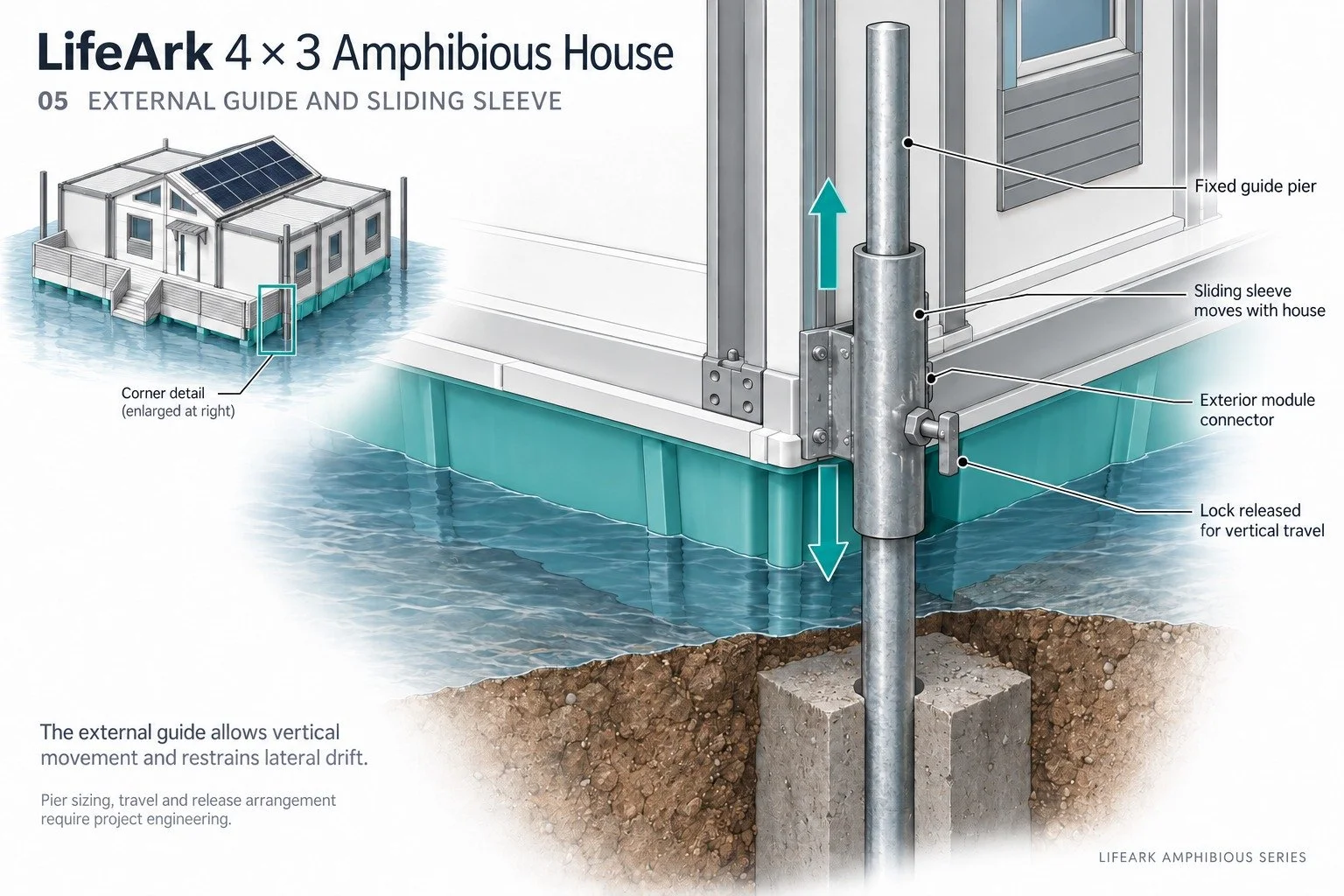
Guide piles and sliding collars: the home rises and falls on a vertical pile and cannot drift
Cable mooring: concealed cables to seabed anchors for deeper or open water
Sheltered edge: wave attenuation outside the neighborhood
Grounded and floating: the land-to-water transition at the shoreline is where the most vulnerable settlements actually sit
Shore connection: gangways and access for boats, services and emergency egress
Diagram 1. The Life Spine and the Plug-In Cluster: plan. Public spine and hub in navy; community clusters plug in through umbilical connections; wave attenuation line outside.
• The spine: what it is (pile-guided pier, 100 to 200 m, utility chase under the deck, shore utility head with freshwater storage and backup power, hub at the end) and what it is for (structure, utilities, backup, access, shared facilities).
• The plug-in cluster: ten to twenty households, fifty to one hundred residents, a complete LifeArk village with its own service module, solar and farms; connects to the spine through one umbilical connection and one structural tie.
• Why it matters: the public builds infrastructure it already knows how to build and own (a pier, a tank, a power connection); the community builds the part that is theirs; the two meet at a standard interface LifeArk designs. Infrastructure cost is spent once and shared by every cluster.
• Resilience logic: solar first, spine backup second; the spine piles are the mooring; the shore head is the emergency landing and maintenance yard; a cluster can be towed away and reconnected after a storm.
• The spoke-and-wheel picture: three or four clusters on one spine, decentralized villages on a shared public lifeline. This is the master prototype for any coastal site.
Diagram 2. The Plug-In Connection: section through the public spine and a cluster platform. Shore utility head, under-deck utility chase, umbilical, structural tie, service module drawing freshwater from the spine.
The Village:
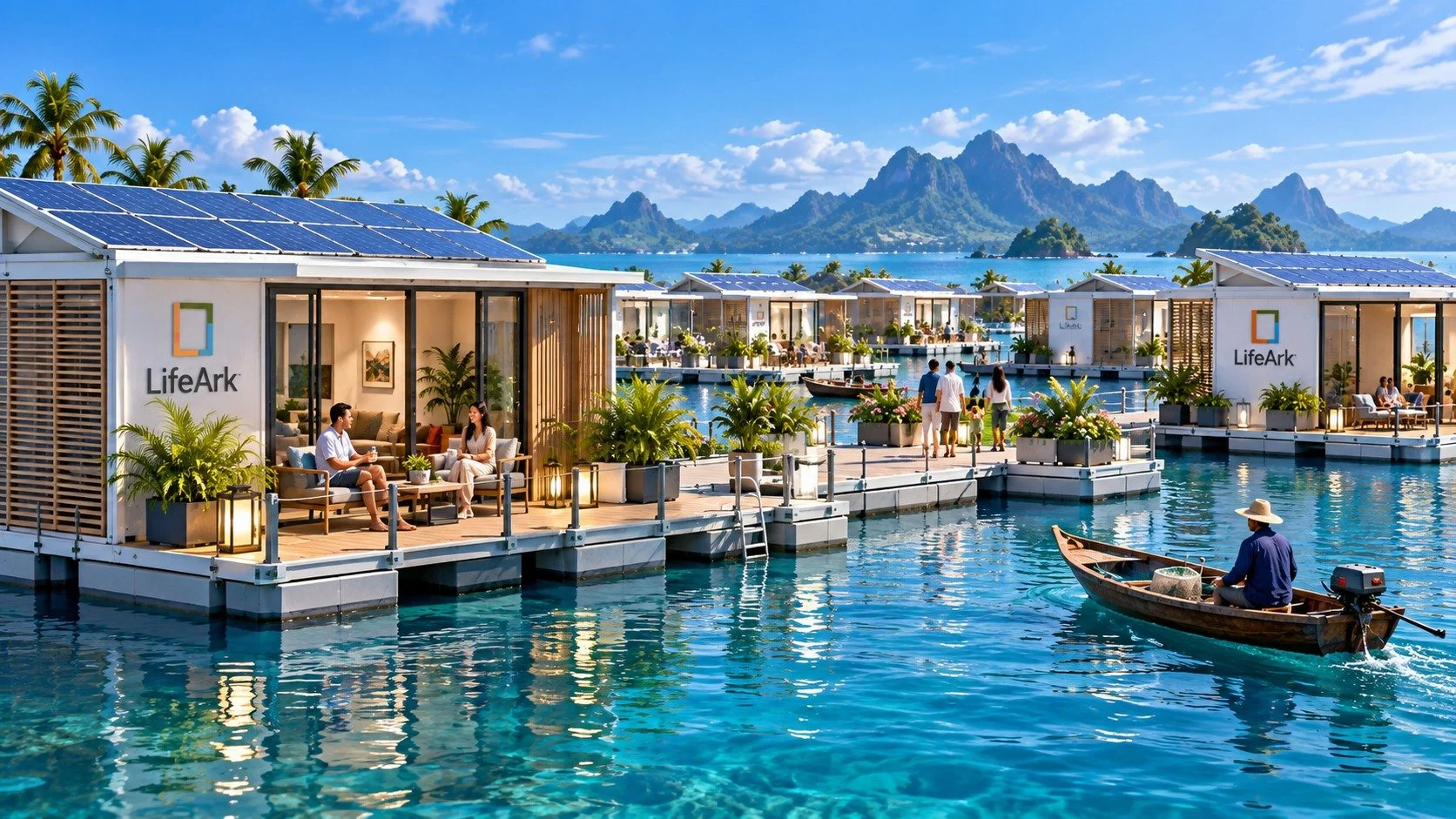
Residents help shape the community around existing family connections, boat access, fishing activity and shared gathering spaces.
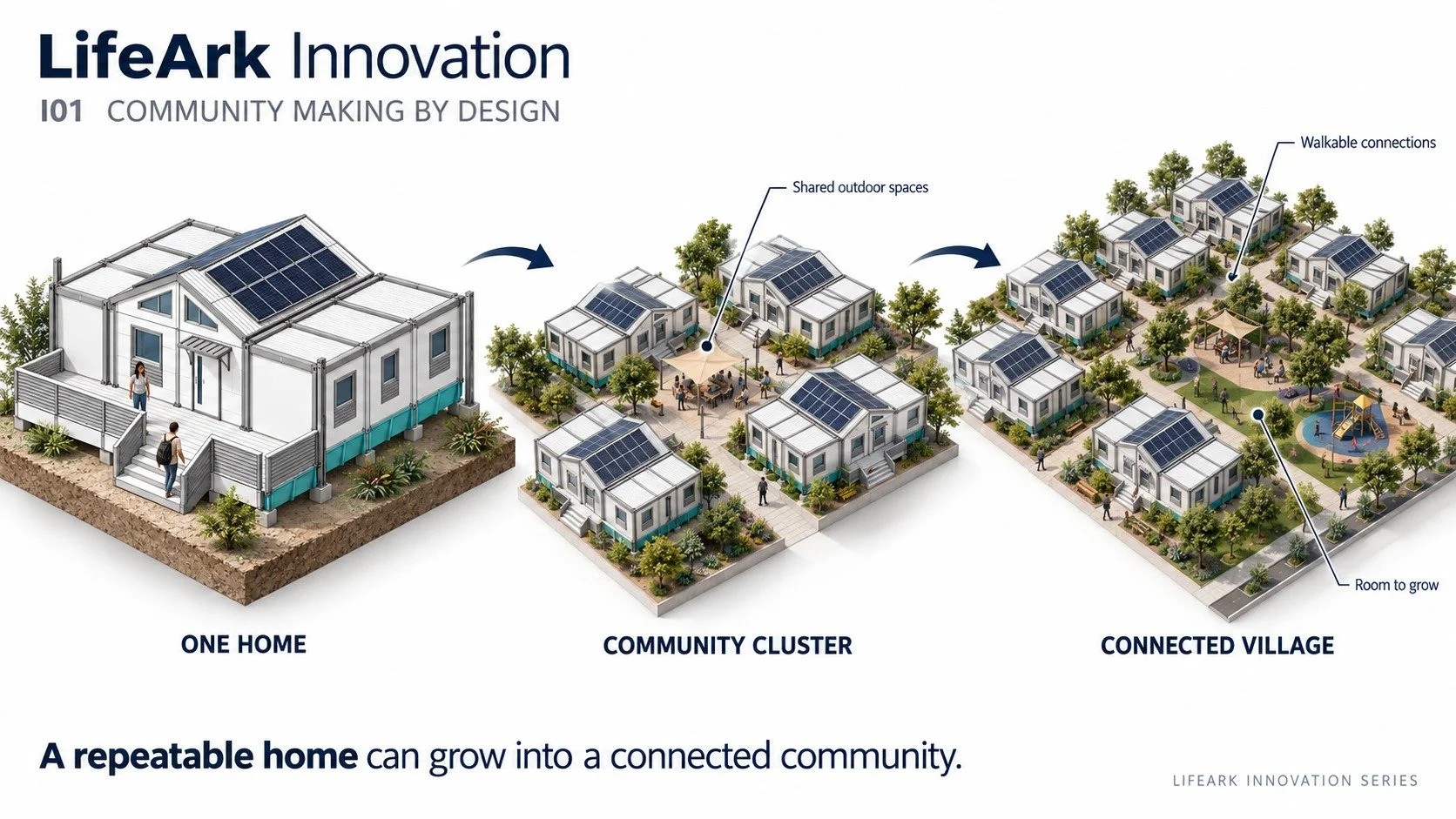
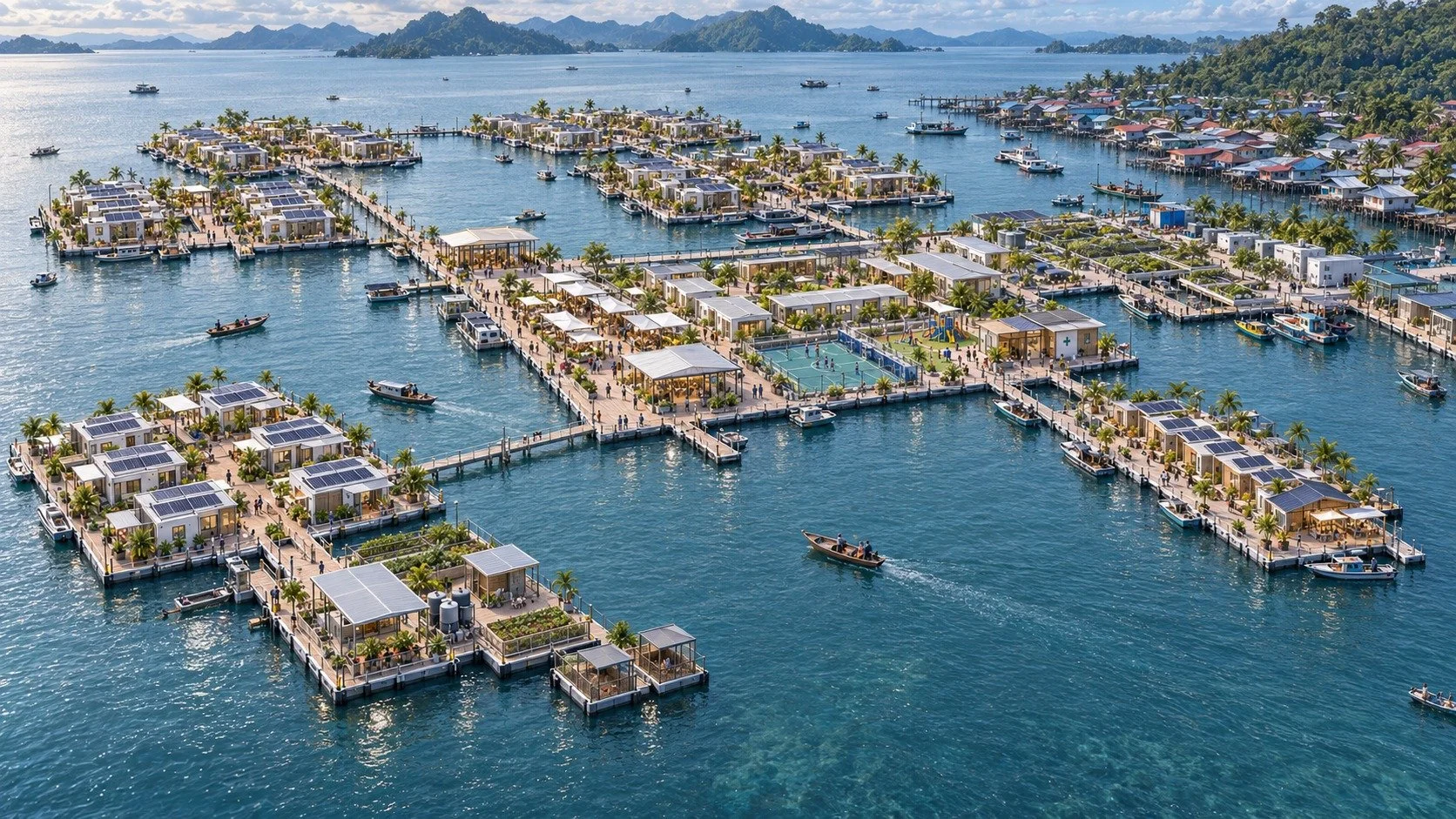
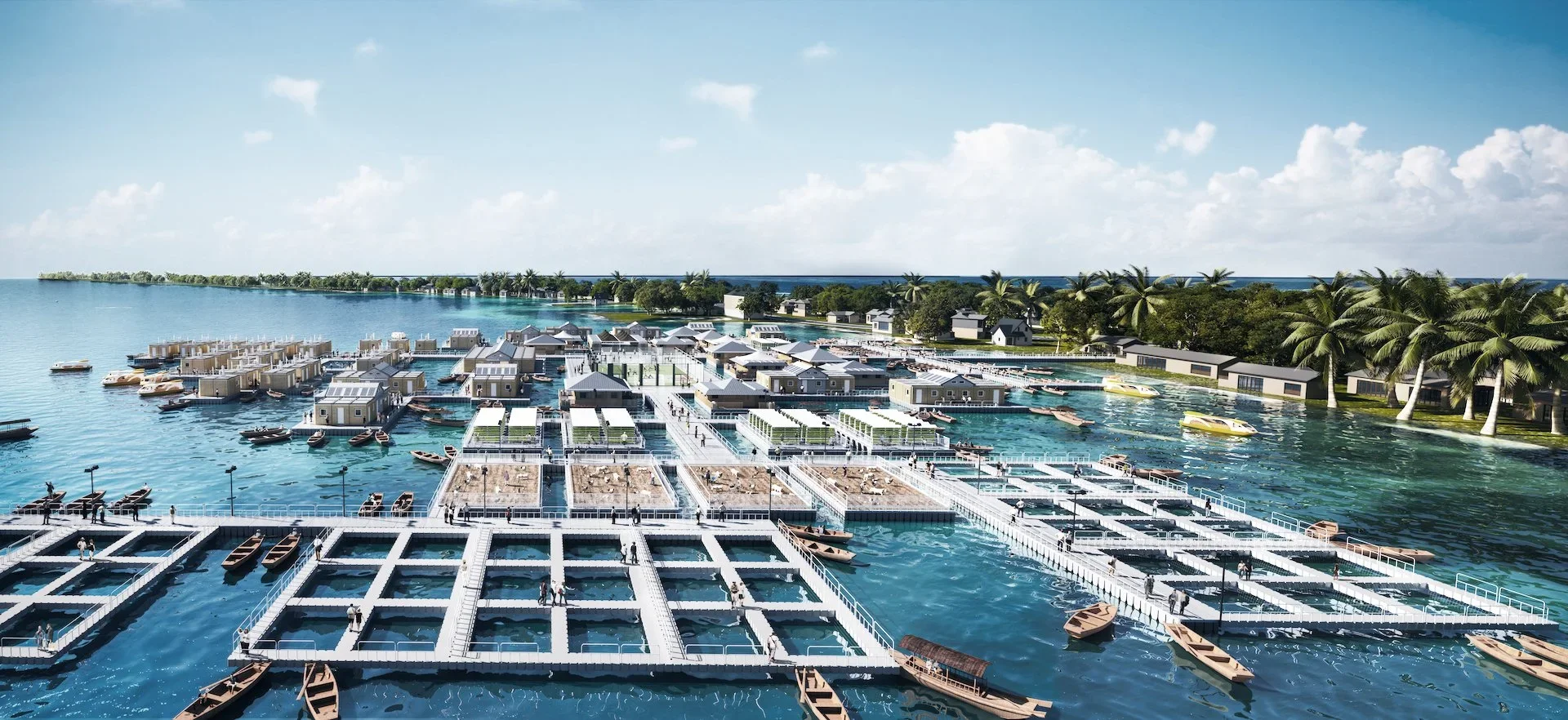
A LifeArk community can begin with a small cluster of homes organized around shared decks, a water court, service systems, growing areas and a boat landing. As the community grows, additional clusters connect by walkway to form larger neighborhoods with shared amenities such as markets, schools, clinics and workshops.
Each stage is designed to function as a complete community. Growth happens by adding to what is already there, with residents helping determine how the community develops over time.
Resident-led planning: the community's existing pattern of family clusters, boat access, fishing landings and gathering places is the base drawing. Design workshops with scale models let residents arrange their own cluster.
Growth: cluster to neighborhood to connected coastal district, with shared facilities added at each scale, on the residents' decision.
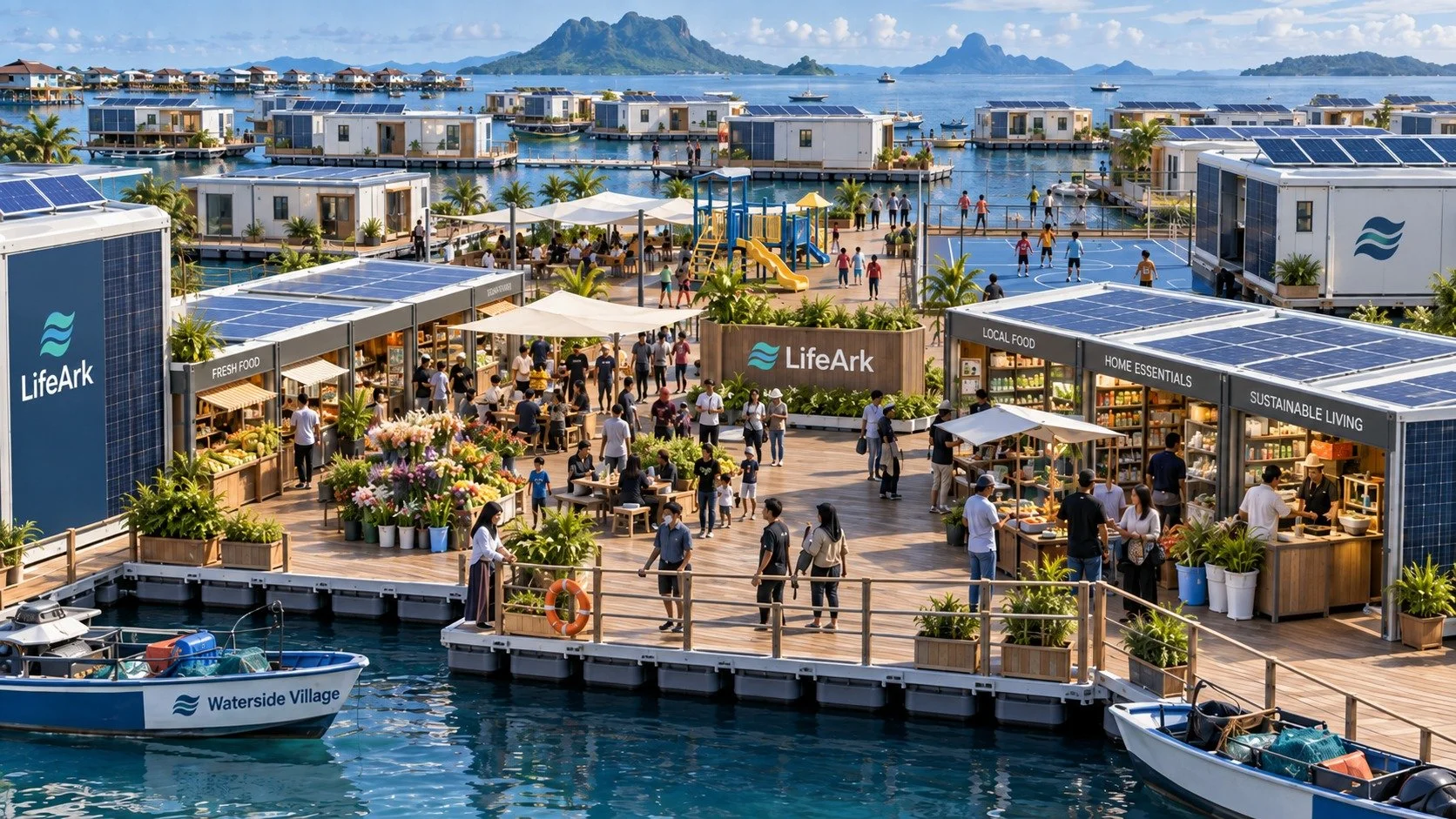
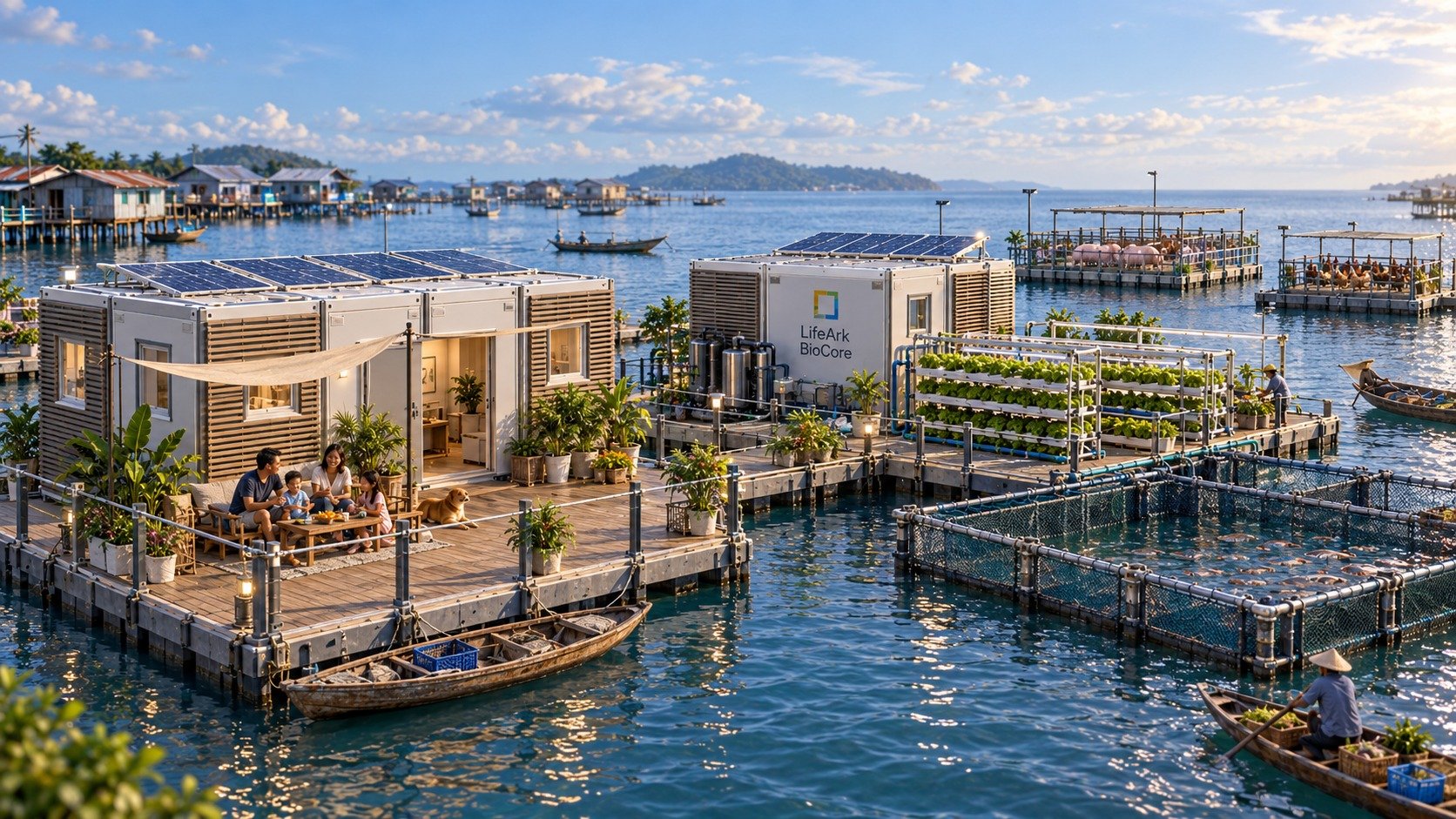
Daily life: homes open onto decks and water; children, boats, gardens and neighbors are part of the plan
Adaptable planning: the same parts allow clusters to be arranged for a river bank, a lagoon, an atoll edge or a flood-prone urban waterfront, and for the customs of the people who live there.
Water, Sanitation and Energy:
Many coastal communities lack reliable access to sanitation, clean water and power. LifeArk is designed to bring these essential systems together within the community.
A floating service module collects and biologically treats household wastewater so water and recovered nutrients can be reused for growing systems. Rainwater can be captured and treated for drinking, while solar energy and battery storage support homes, pumps and shared services. Because the service module is part of the same LifeArk system, it can float with the community and expand as additional clusters are added.
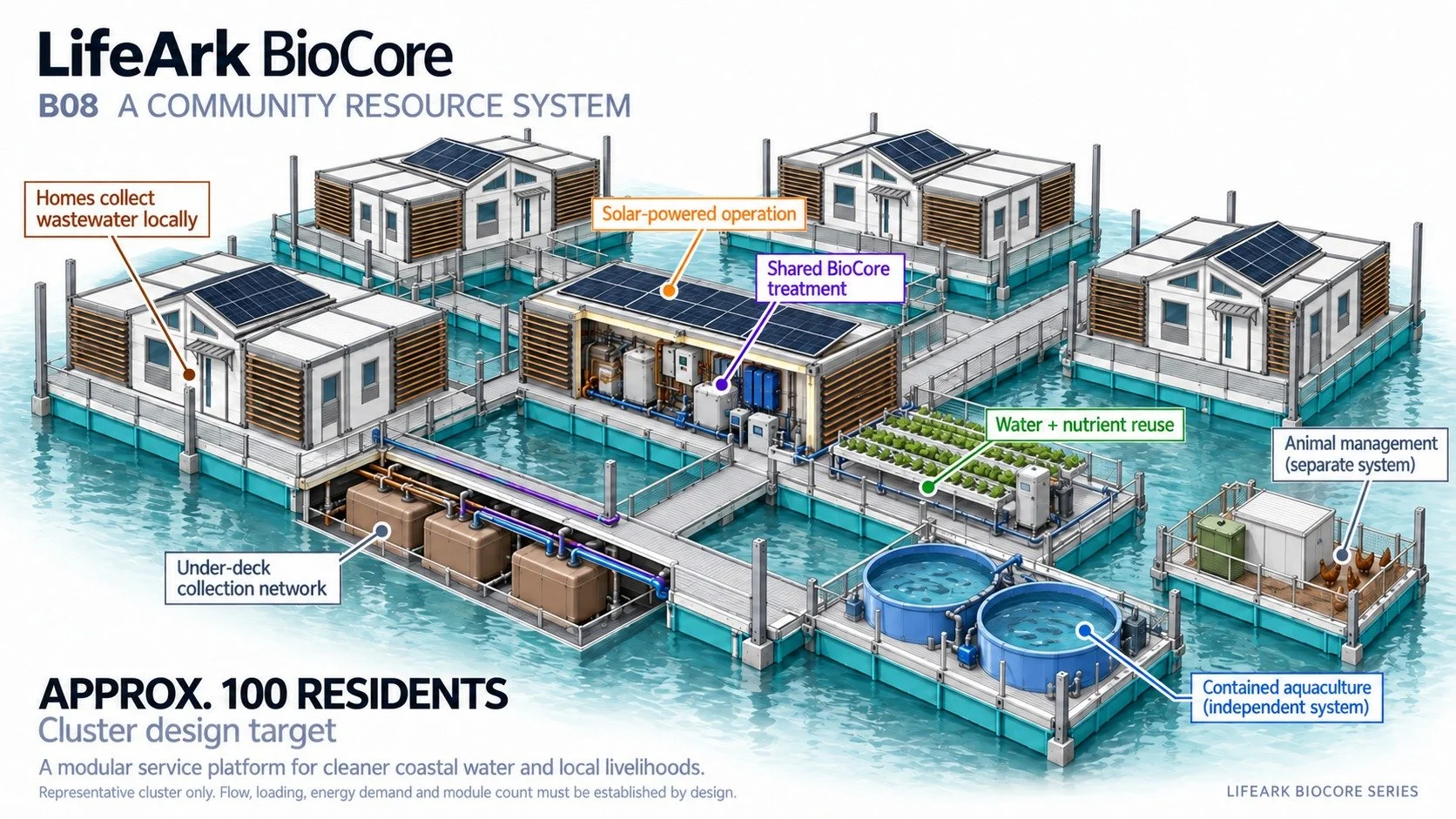
The community water and sanitation module: collection via the walkway service platform, hull storage compartments, biological treatment on deck, clean water storage, sensor-controlled pumping.
Reuse routes: treated water and recovered nutrients to hydroponics and aquaculture; the independent fish loop.
Drinking water: rainwater collection and advanced treatment.
Energy: solar facade and roof, battery storage, community microgrid, energy-efficient home systems.
Capacity by replication: one module serves a cluster; add modules as the community grows, and the whole system continues to float on its own buoyancy.
Community and Livelihood:
A resilient community needs more than safe housing. It also needs strong livelihoods, access to food and essential services, places to learn and gather and the skills to manage its own growth over time.
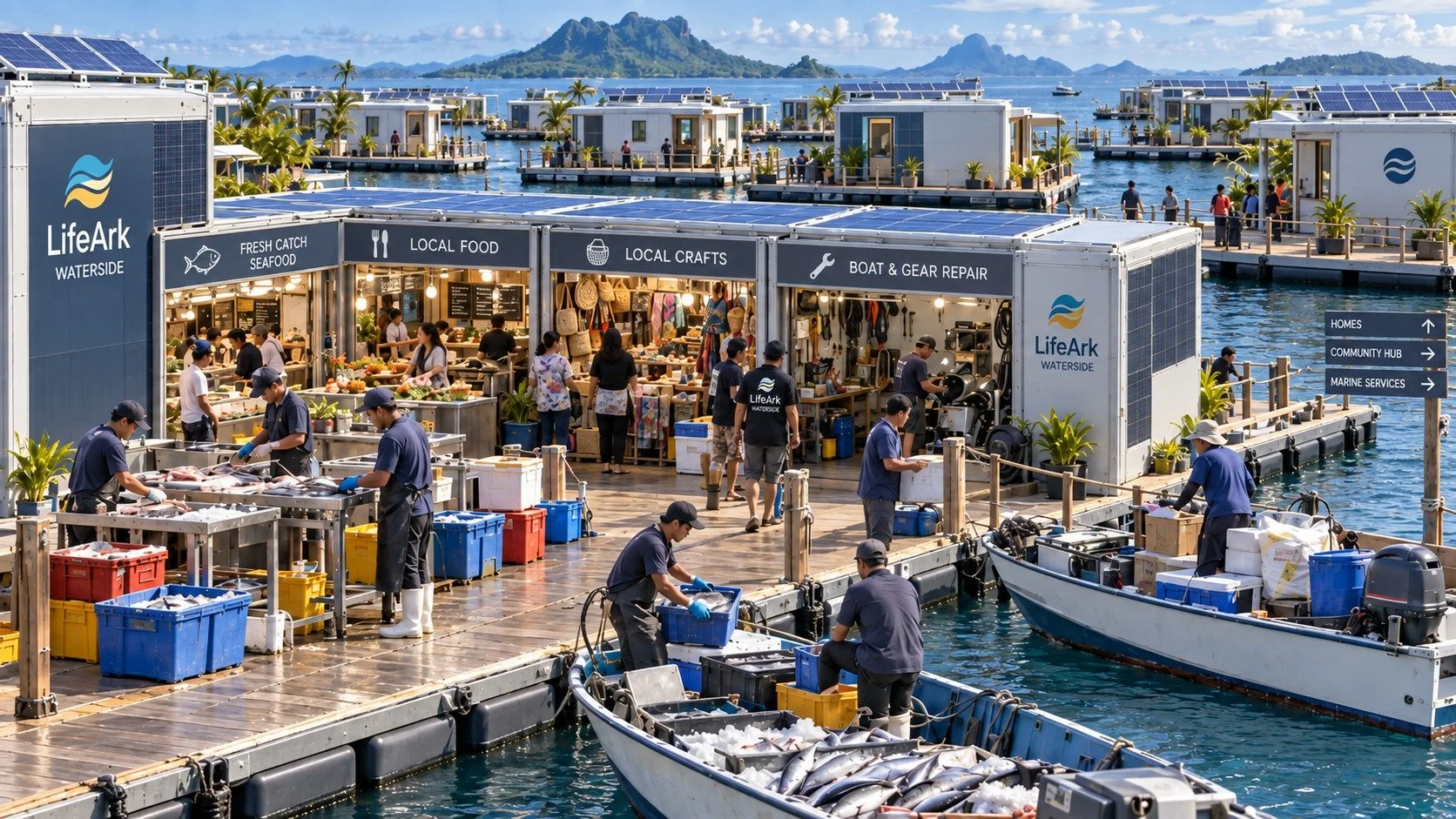
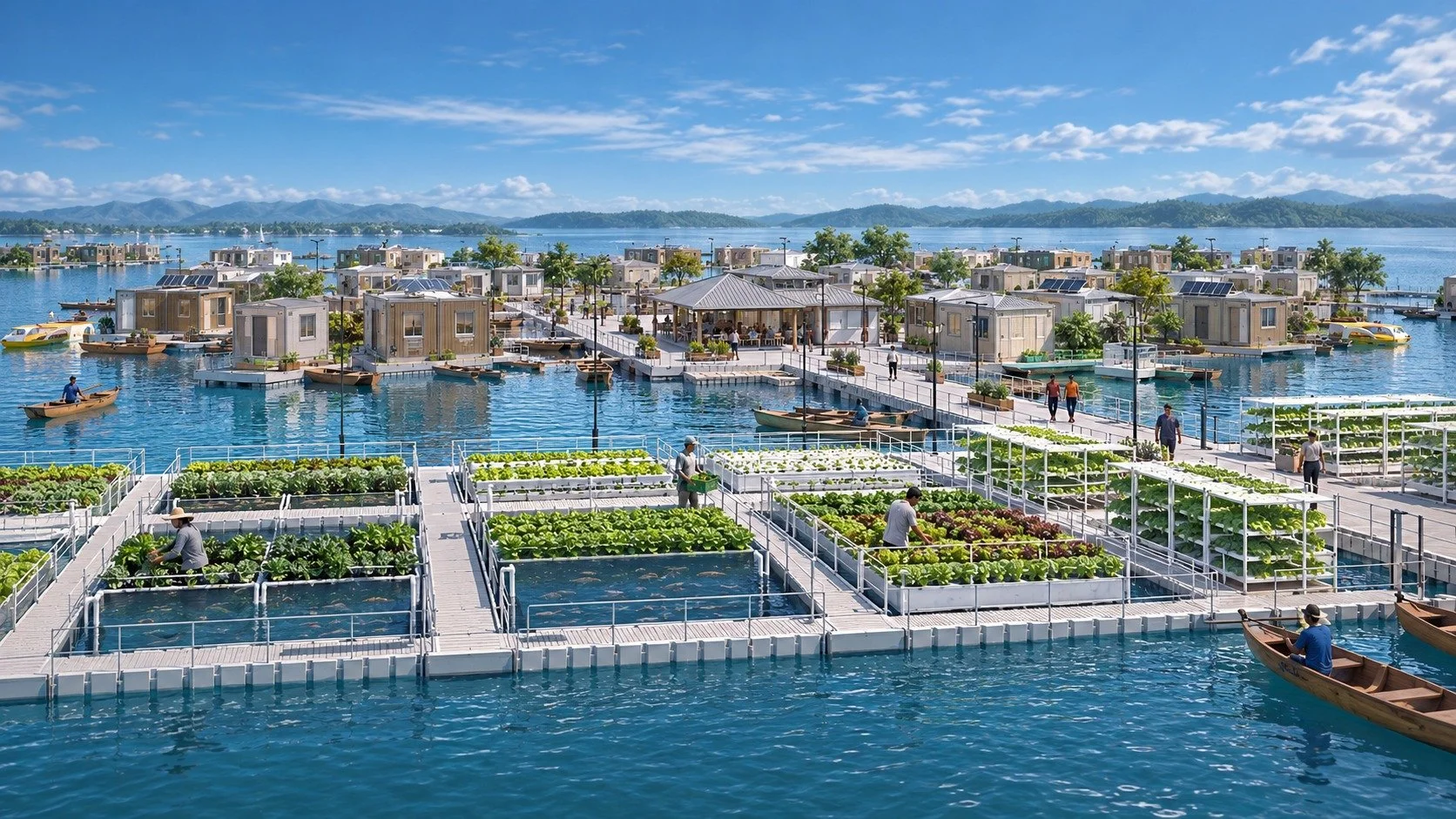
Fishing remains the foundation of the local economy. Residents keep their boats, fishing grounds and existing trade while gaining better infrastructure to support that work. Working docks, boat landings, cold storage, repair areas and direct-sale markets can make the existing fishing economy safer and more reliable. Floating farms, hydroponics and aquaculture can then add new sources of food and income without replacing the livelihoods already in place.
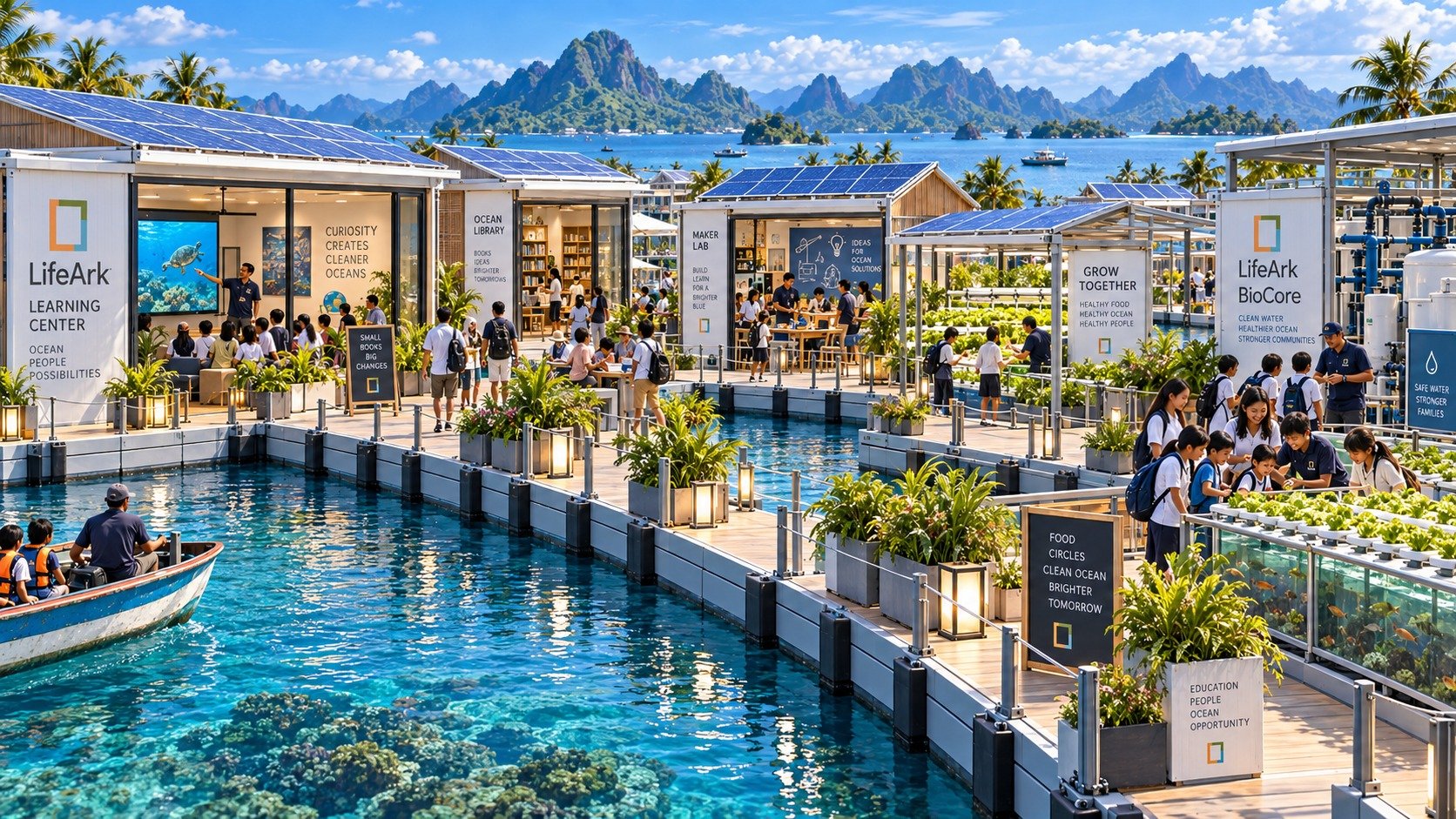
The same community also includes the social infrastructure people rely on every day. Schools, clinics, community spaces, play areas and training facilities are integrated into the settlement using the same modular system. Through LifeArk University, residents can develop practical skills in assembly, water-system operation, food production, maintenance and community planning. Those skills remain within the community and can support future growth.
Community participation continues beyond construction. Residents help shape how shared spaces are used, how systems are maintained and how the settlement expands over time.
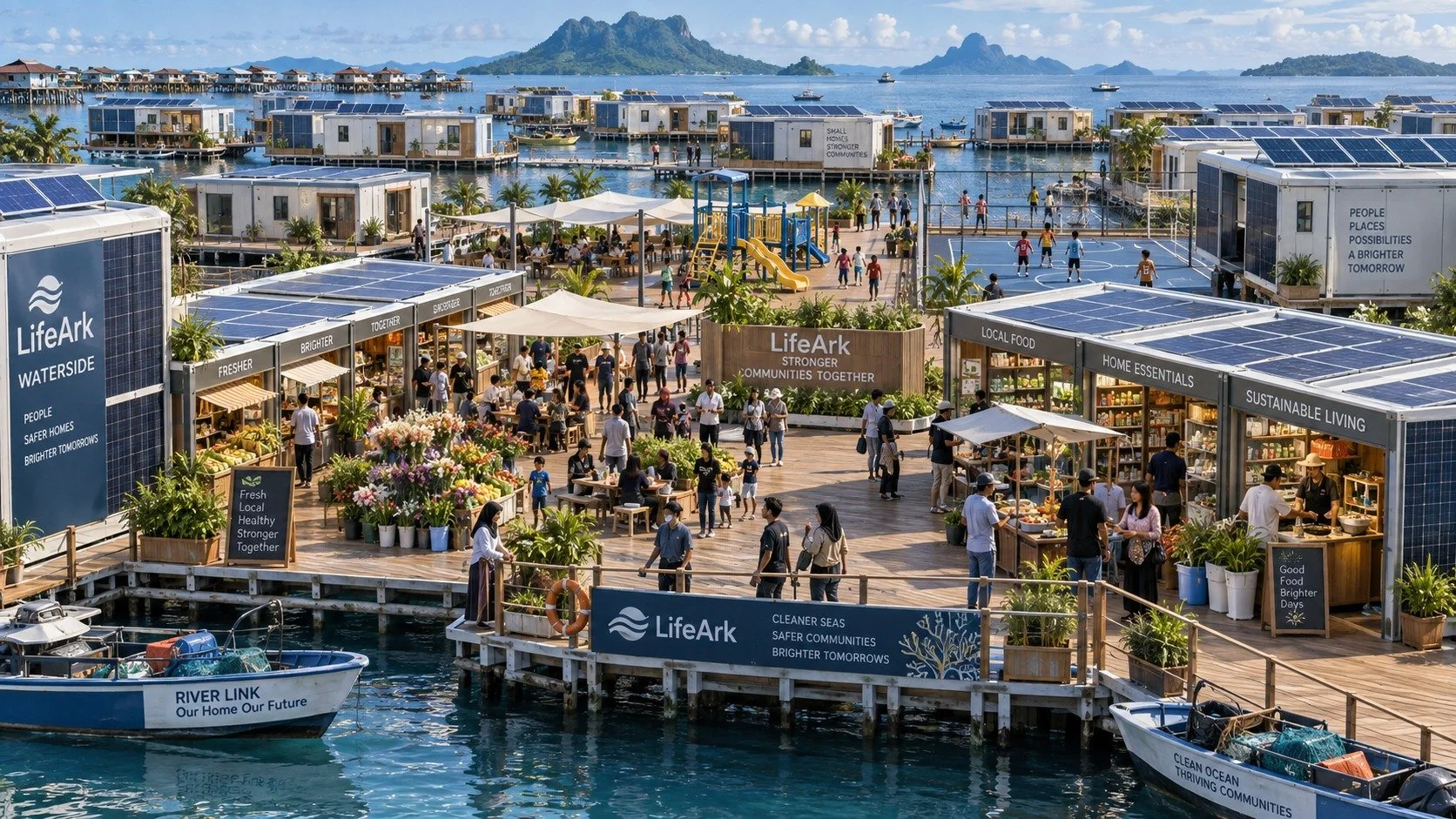
More ways to produce food: Hydroponic growing beds, aquaculture and aquaponic systems can expand local food production and create additional income between fishing seasons or during poor weather.
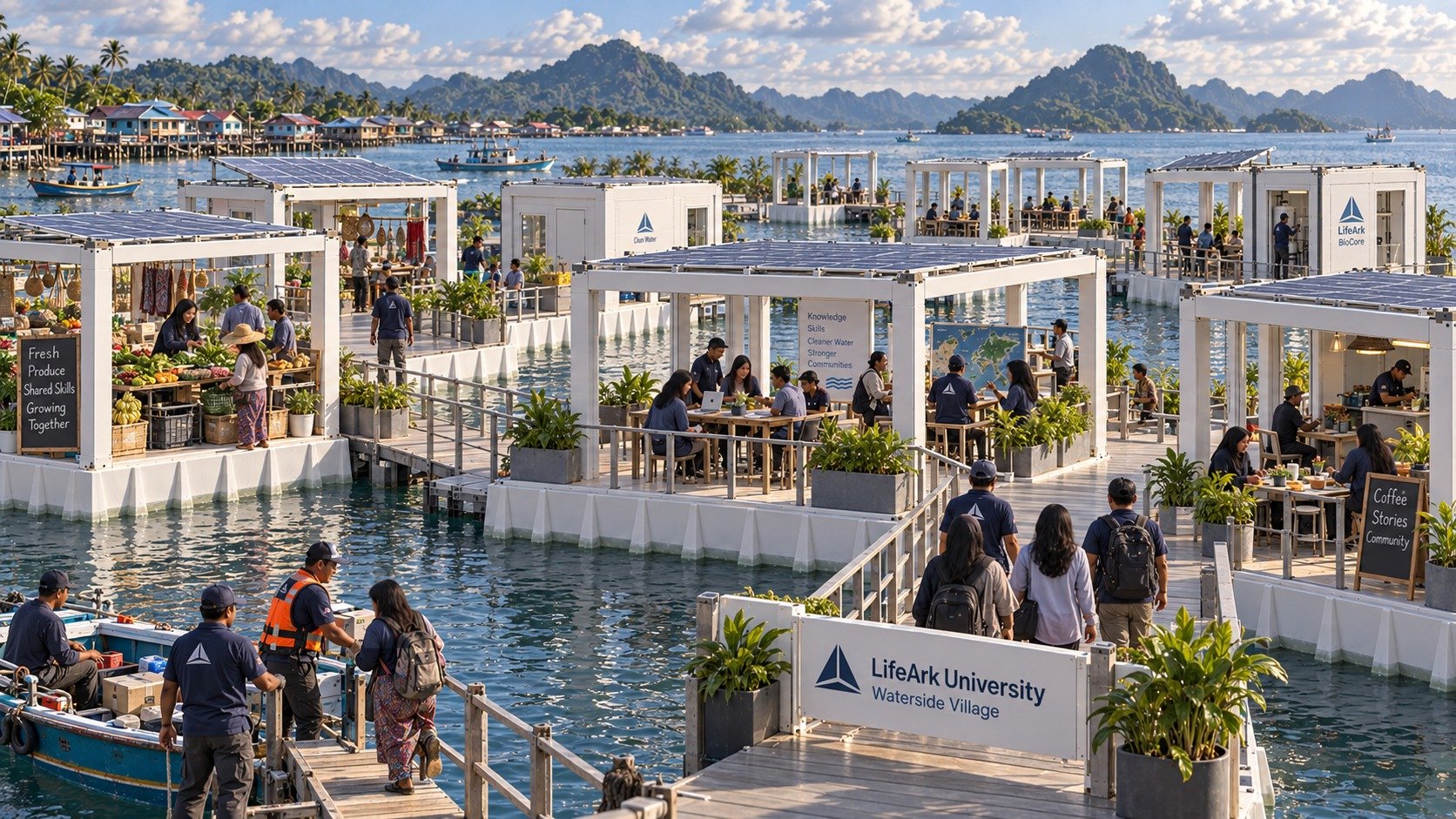
A community marketplace: Fish landings, produce exchanges, food stalls and small shops create a local commercial center and connect residents to the wider economy.
Schools, healthcare and shared spaces: Learning centers, neighborhood clinics, community rooms, playgrounds, sports areas and shaded gathering spaces help turn a group of homes into a complete community.
Skills that stay local: LifeArk University can provide hands-on training in module assembly, water and sanitation systems, food production, aquaculture and maintenance trades.
Learning built into everyday life: Training spaces, growing areas and community systems can also serve as places where residents and children learn how the settlement works and how to care for it.
Resident-led governance: Community members participate in decisions about growth, shared systems, maintenance and local enterprises so the community continues to reflect the needs of the people who live there.
Enterprise and Eco-Tourism:
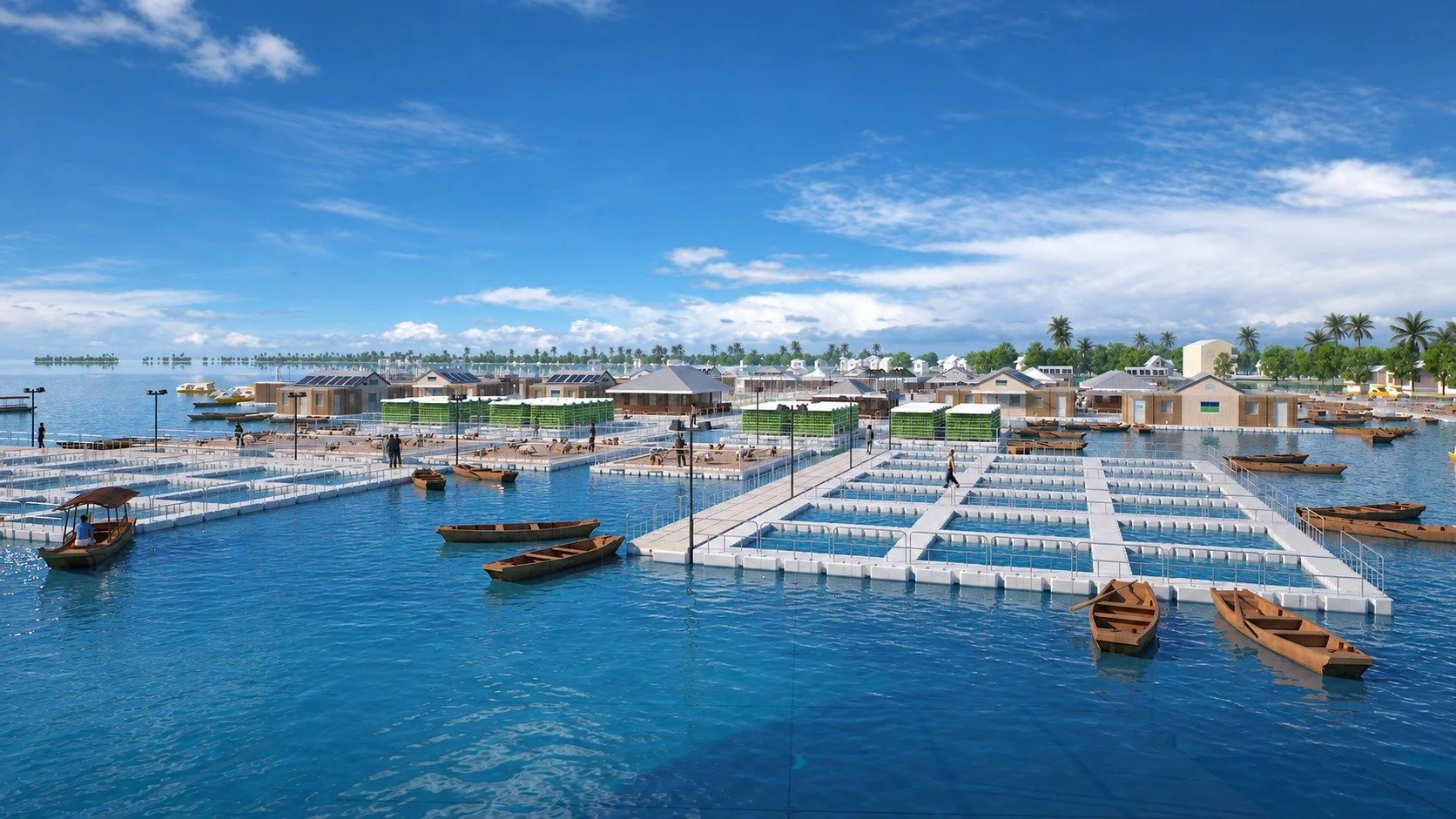
A LifeArk community can also support businesses that create jobs and generate income for residents. In coastal settings, a small visitor village can sit alongside the residential community with guest lodges, a welcome dock, local dining, crafts and water-based activities. These businesses can be operated by residents and help support the ongoing cost of shared community systems.
The same model can support other local enterprises tied directly to the settlement, including aquaculture, food production, assembly and repair, training and logistics. Together, these activities create a broader local economy and give residents more ways to earn income within the community.
Visitor village: Guest lodges, a welcome dock, dining, local crafts, nature activities and water-based recreation can create a small-scale tourism destination connected to the community.
Resident-run businesses: Hospitality, guiding, food services and craft businesses can be operated locally, keeping more economic activity within the community.
Local enterprise: Aquaculture, fish and produce sales, cold storage, logistics and maintenance can build on the community’s existing economy.
Regional services: Assembly and repair workshops and training facilities can serve both the community and future LifeArk developments in the surrounding region.
Supporting long-term operations: Revenue from local enterprises can help support maintenance, shared services and other ongoing community needs.
A stronger case for investment: A mix of local businesses and revenue-generating uses can create jobs while also giving public and private partners a stronger reason to participate in the development.
Building Together:
A Living with Water community is designed to be built and operated through partnership. The public sponsor establishes the shared infrastructure. Community and development partners build and operate the individual clusters. LifeArk provides the building system, planning framework, connection standard, training and quality requirements that bring the pieces together.
At the center is the Life Spine. This shared public infrastructure carries utilities, emergency access and common services. Individual community clusters connect to the spine through a standard interface so they can be developed independently while remaining part of one larger system. As new clusters are added, the community can grow without rebuilding the infrastructure already in place.
Regional manufacturing is part of the model as well. Licensed facilities produce LifeArk components locally to a common quality standard while building long-term manufacturing and technical capacity in the region.
Public infrastructure: The public sponsor provides the site and community process and builds, owns and maintains the Life Spine, including the pier, utility backbone, freshwater storage, backup power, emergency access and shared facilities.
Community clusters: Each cluster can be developed and operated by a community organization and development partner. Homes, service systems, farms and local enterprises connect to the shared spine.
A standard connection: A common plug-in framework establishes how each cluster connects to shared utilities, services and infrastructure. The same approach can support multiple clusters as the settlement grows.
LifeArk system and standards: LifeArk provides the modular building system, cluster planning, connection interface, training and quality standards that allow different parts of the development to work together.
Regional manufacturing network: Licensed manufacturing partners can produce the system closer to where it is needed while following a consistent standard for production and quality control.
Designed to grow: A community can begin with one cluster and expand by adding additional clusters to the same spine. The same model can then be repeated through additional spines and regional manufacturing capacity.
Shared long-term value: The public side gains resilient housing, infrastructure and local production capacity. Community and private partners gain opportunities to develop housing, services and enterprises within a repeatable framework.
Continuous improvement: Independent evaluation can measure how each community performs and help improve future clusters, infrastructure and regional deployments.